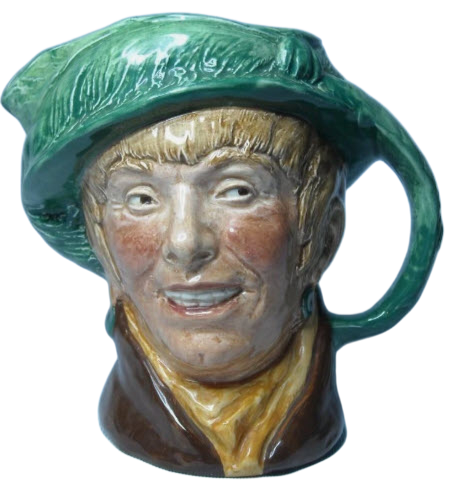
The Rise, Fall, and Future of Royal Doulton Character Jugs and Figurines
Royal Doulton is one of the most storied names in British ceramics, representing centuries of craftsmanship. Among their most famous outputs are character jugs (bust-portrait pitchers depicting historical, literary, and fictional figures) and hand-painted porcelain figurines (cataloged under the famous HN numbering system).
For generations, these charming ceramic pieces filled display cabinets across the globe. Today, however, the market looks radically different. This guide explores their history, when they peaked, why they fell out of fashion, and whether they represent a smart purchase for the future.
1. History and Origins
The Figurine Department & the “HN” System
While Royal Doulton’s factory roots date back to 1815 in Lambeth, London, their famous line of bone china figurines was officially launched in 1913. The mastermind behind this artistic expansion was Charles Noke, the art director at Doulton.
To organize the massive output of figurines, the factory instituted the HN numbering system—named in honor of Harry Nixon, a senior artist and painter at the factory.
Early Era (HN 1 to HN 1000): Spanning roughly from 1913 through the 1930s, these pre-war pieces were produced in smaller quantities, featured intricate hand-painting, and are considered the golden age of Doulton artistry.
Post-War Boom (HN 1000 to HN 3000+): Following World War II, production skyrocketed to satisfy a global demand for romantic, historic, and whimsical subjects like The Old Balloon Seller and The Ballerina.
The Evolution of Character Jugs
Traditional “Toby jugs” (full-body seated figures holding a mug of ale, named after an 18th-century tavern song) had been made in Britain for centuries. In 1934, Charles Noke revolutionized the concept for Royal Doulton by narrowing the focus entirely to bust-length portraits—capturing the expressive face, shoulders, and thematic handles of famous characters.
The first character jugs released in 1934 were John Barleycorn and Old Charley. They proved to be an instant sensation. Over the next several decades, Royal Doulton expanded the line to include:
Literary and Fictional Icons: Figures from Charles Dickens, Shakespeare, and Robin Hood.
Historical & Military Figures: Monarchs, prime ministers (like Winston Churchill), and naval commanders.
Occupational & Hobbies Series: Judges, golfers, firemen, and policemen.
2. When Were They Most in Fashion?
Royal Doulton pieces enjoyed two major golden eras of popularity:
The Pre-War Art Deco Period (1920s–1930s): Highly prized by elite collectors for their exquisite sculpting, delicate modeling, and limited runs.
The Mid-to-Late 20th Century Boom (1960s–1990s): This was the era of mass collecting. Driven by aggressive marketing, specialized collectors’ clubs, price guides, and international travel souvenirs, millions of households built extensive collections. During the 1970s and 1980s, buying a Royal Doulton figurine or character jug was viewed as both a chic home decor choice and a secure investment that would supposedly appreciate over time.
3. Why Have They Gone Out of Fashion?
If you look at secondary markets today, you will notice a stark drop in prices for standard pieces compared to their 1990s peaks. Several cultural and economic shifts drove this decline:
Shifting Interior Design Trends: Younger generations favor minimalist, modern, or neutral aesthetics. Traditional wooden breakfront china cabinets packed with colorful, glossy ceramic faces and porcelain ladies no longer fit contemporary home decor.
Generational Demographic Shift: The core demographic of passionate collectors—Baby Boomers and the Silent Generation—is aging out of the market. As estates are liquidated, the market has become completely flooded with supply.
The “Mass Production” Trap: Because Royal Doulton manufactured millions of pieces during their peak decades to satisfy demand, very few post-war models are genuinely rare. Basic economic supply and demand dictate that an oversupplied market drives prices down.
Loss of Utility and Narrative Connection: Many modern buyers do not connect with historical figures, Dickensian characters, or traditional British folklore in the way previous generations did.
4. Are They Good to Buy Now, and Will They Come Back in Price?
Will they bounce back to their former peak prices?
Generally speaking, no. Common, mass-produced post-war character jugs and standard figurines are unlikely to ever return to their speculative 1990s price peaks. There is simply too much inventory sitting in attics and thrift shops, and consumer tastes have permanently pivoted.
Are they good to buy?
It depends entirely on what you buy and why you are buying:
As an Investment: Buying common pieces as an investment is a losing game. However, a strict niche of rarities still commands enormous prices at high-end auction houses. This includes:
Very early HN numbers (pre-1940 figurines, especially pristine pieces from the 1910s and 1920s).
Factory prototypes, color trials, and colorways that differ from standard production runs.
Withdrawn or extremely short-run character jugs and rare double-faced jugs.
Items in flawless mint condition complete with original boxes and certificates.
For Personal Enjoyment: From a strictly decorative or nostalgic standpoint, it is a fantastic time to buy. Because market prices have collapsed at the low end, you can frequently find stunning, high-quality hand-painted art pottery for a fraction of its original manufacturing cost.
If you buy pieces because you genuinely love the craftsmanship and history—rather than expecting a quick financial windfall—Royal Doulton offers incredible value today.