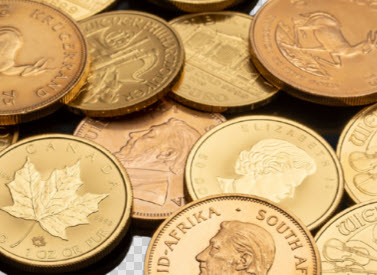
Collecting gold coins offers a rare blend of financial security, historical weight, and artistic craftsmanship. Whether you are looking to hedge against inflation, construct a tangible store of value, or assemble an exquisite cabinet of rare numismatic art, the world of gold coinage has something tailored to every collector.
Gold coins generally fall into three distinct categories: Modern Sovereign Bullion (prized for liquidity and tax advantages), Pure Fine Gold Coins (celebrated for technical perfection and design), and Historic & Numismatic Treasures (where rarity and history command significant market premiums).
1. The Sovereign Class: Investment Meets Heritage
Sovereign bullion coins are legal tender issued by official national mints. They are the backbone of most physical precious metal portfolios, offering standard weights, reliable purities, and instant global liquidity.
The British Gold Sovereign
Purity: 22-carat ($91.67\%$ gold, alloyed with copper for durability)
Actual Gold Content: $7.322\text{ grams}$ ($0.2354\text{ troy oz}$)
Best For: Fractional investing, British history, and UK tax efficiency.
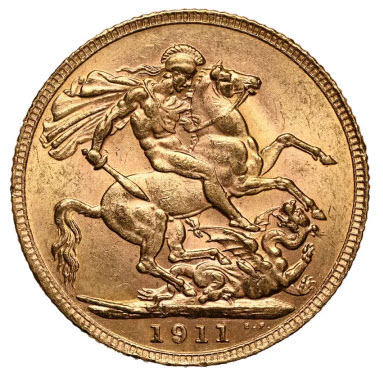
First struck under King Henry VII in 1489 and revived in its modern form in 1817, the British Sovereign is one of the world’s oldest continuously minted gold coins. Featuring Benedetto Pistrucci’s iconic engraving of St George slaying the dragon on the reverse, the Sovereign is recognized globally.
Because it carries a nominal face value as British legal tender, UK residents benefit from complete Capital Gains Tax (CGT) exemption on profits when re-selling. Its smaller size makes it an ideal option for flexible, incremental buying.
The South African Krugerrand
Purity: 22-carat ($91.67\%$ gold)
Actual Gold Content: $1.00\text{ troy oz}$ ($31.103\text{ grams}$)
Best For: Maximum global liquidity and lower dealer premiums.
Introduced in 1967 by the South African Mint to help private individuals own physical gold, the Krugerrand is the progenitor of the modern bullion coin. Alloyed with copper, it carries a distinctive reddish-gold hue and superior scratch resistance. While it lacks a face value stamped on the coin, its value trades strictly alongside the spot price of gold. It remains one of the lowest-premium 1 oz coins on the market.
2. Ultra-Pure Modern Classics: Artistic Masterpieces
For collectors who prioritize visual brilliance and maximum metal purity, 24-carat fine gold coins represent the pinnacle of minting technology.
| Coin | Origin | Purity | Standout Feature |
| Gold Britannia | Royal Mint (UK) | 999.9 Fine (24ct) | CGT-exempt in the UK + state-of-the-art anti-counterfeiting security features. |
| Canadian Gold Maple Leaf | Royal Canadian Mint | 999.9 Fine (24ct) | Renowned laser-micro-engraved security leaf and light-diffracting radial lines. |
| Austrian Philharmonic | Austrian Mint | 999.9 Fine (24ct) | The only euro-denominated major gold bullion coin, featuring orchestral instruments. |
| Australian Gold Kangaroo | Perth Mint | 999.9 Fine (24ct) | Features a completely redesigned kangaroo motif every single year. |
Why Choose 24-Carat Pure Coins?
Coins struck in $.9999$ fine gold do not tarnish or discolor over time. Their butter-yellow sheen makes them favorites for display cabinets and collectors who appreciate high aesthetic brilliance. The UK Gold Britannia is particularly favored by collectors in Great Britain because it pairs $.9999$ fine gold beauty with legal tender CGT exemption.
3. Historic Continental Gold: European Charm
If you are drawn to history, political drama, and 19th-century elegance, European trade gold coins offer an accessible entry point into numismatic collecting.
French Napoleon / Marianne (20 Francs): Struck during times of French imperial power and revolution, these $90\%$ pure gold coins ($5.80\text{g}$ pure gold content) carry immense historical appeal at reasonable premiums above spot.
Swiss Vreneli (20 Francs): Featuring the iconic depiction of “Helvetia” against an Alpine backdrop, the Swiss 20 Franc coin is widely collected for its crisp design, cold-war emergency vault provenance, and historic status.
Austrian Ducats: Exceptionally thin with intricate double-headed eagle crests, four-ducat re-strikes ($98.6\%$ purity) offer large surface areas for showcasing fine detail.
Key Considerations for Building Your Collection
1. Investment vs. Numismatic Value
Bullion Coins: Value is tied directly to the weight of gold content (melt value) plus a modest dealer premium ($3\%\text{–}8\%$). Best for pure asset preservation.
Numismatic / Rare Coins: Value depends on mintage scarcity, historical significance, condition, and grading. Prices can significantly exceed intrinsic gold value.
2. Tax Advantages (UK Focus)
Under current UK tax law, all investment-grade gold coins are exempt from VAT. Furthermore, gold coins produced by The Royal Mint that hold legal tender status (such as Gold Sovereigns and Gold Britannias) are exempt from Capital Gains Tax (CGT). This allows investors to realize unlimited profits upon sale without triggering tax liabilities.
3. Storage and Preservation
Pure 24-carat gold ($999.9$) is relatively soft and prone to scratching if handled directly with bare hands. Always keep high-purity coins in protective acrylic capsules or mint-sealed tubes, and handle them by the edges using soft cotton gloves.
For true numismatists, collecting gold coins goes far beyond measuring spot prices or tracking market hedges. It is about holding tangible artifacts of human civilization—from imperial propaganda and medieval majesty to political rebellion and artistic perfection.
A well-curated gold cabinet spans centuries, tracing how power, art, and trade evolved through precious metal. This guide explores the most rewarding historical and classic gold coins to collect for their aesthetic beauty, rarity, and place in history.
1. Classical Antiquity: Roman Gold
Ancient Roman gold coins are among the most evocative pieces a numismatist can own. They served both as currency for high-value trade and as political propaganda, distributing the Emperor’s image and achievements across a vast empire.
The Aureus (c. 1st Century BC – 4th Century AD)
Design & Significance: Struck in exceptionally high-purity gold (often exceeding 98% pure), the aureus was the standard high-denomination gold coin of the late Republic and Early Empire. Emperors used the obverse portrait to showcase regal strength, divine lineage, or family succession, while the reverse depicted military victories, deities, or monumental architecture.
Why Collect: Aurei feel substantial in the hand and possess a deep, warm golden tone. Collecting the “Twelve Caesars” (from Julius Caesar to Domitian) in gold remains one of numismatics’ ultimate pursuits.
The Solidus (Introduced by Constantine the Great, c. 312 AD)
Design & Significance: Replaced the heavier aureus during the late Roman and early Byzantine eras. The Solidus featured more stylized, Christian, and regal iconography, laying the artistic groundwork for medieval European coinage.
Why Collect: Generally more accessible and affordable than early Imperial aurei, offering an entry point into classical gold.
2. Medieval & Renaissance England: The Age of Hammered Gold
Before mechanized minting, coins were produced by hand using iron dies and hammers. The resulting “hammered” coins carry individual character—no two specimens are identical.
The Gold Noble (Edward III, c. 1344–1470)
Design: The first successful, widely circulating English gold coin. The obverse depicts King Edward III standing in a ship, holding a sword and shield, symbolizing England’s naval strength following the Battle of Sluys. The reverse features a intricate floriated cross.
Why Collect: It is a masterpiece of Gothic art. Struck in near-pure gold (“Angel” or “Sovereign” purity at 23¾ carats), its broad flan gives engravers room for striking detail.
The Gold Angel (Edward IV to Charles I, c. 1465–1649)
Design: Displays Archangel Michael slaying a dragon on the obverse and a ship bearing a shield and cross on the reverse.
Why Collect: Famous as the “touch piece” given by monarchs to subjects suffering from scrofula (the “King’s Evil”), believed to possess healing properties. It carries a blend of religious imagery and folklore.
       [ Classical & Early English Gold Timeline ]

   Ancient Rome               Medieval                    Tudor & Stuart             Hanoverian & Victorian
   (27 BC – 476 AD)           (1344 – 1485)               (1485 – 1714)              (1714 – 1901)
┌──────────────────────────┬──────────────────────────┬──────────────────────────┬──────────────────────────┐
│ • Roman Aureus           │ • Edward III Noble       │ • Tudor Sovereign        │ • Gold Guinea            │
│ • Byzantine Solidus      │ • Gold Angel             │ • Charles I Triple Unite │ • Jubilee/Veiled Head    │
│                          │                          │                          │   Victorian Sovereigns   │
└──────────────────────────┴──────────────────────────┴──────────────────────────┴──────────────────────────┘
3. Tudor & Stuart Grandeur (1485–1714)
The Tudor and Stuart eras produced some of the largest, most visually impressive gold coins ever minted in Britain.
The Original Tudor Sovereign (Henry VII, 1489)
Design: Commanded by Henry VII to demonstrate England’s wealth and prestige to Europe. It depicts the King enthroned in full coronation robes on the obverse and the Royal Arms set against a large Tudor Rose on the reverse.
Why Collect: It established the “Sovereign” name. These early hammered sovereigns are rare museum-class centerpieces.
The Triple Unite (Charles I, Civil War Era, 1642–1644)
Design: The largest hammered gold coin struck in England, valued at 60 shillings (£3). Produced at Charles I’s wartime mint in Oxford, it shows the King holding a sword and olive branch, surrounded by his “Declaration” to defend the Protestant religion, English laws, and parliamentary liberty.
Why Collect: A dramatic artifact of the English Civil War. Weighing over 27 grams, its size and historical context make it one of Britain’s most coveted numismatic treasures.
4. Georgian & Victorian Elegance: Milled Gold (1663–1901)
With the introduction of the screw press, “milled” coins replaced hammered coinage, bringing uniform dimensions, sharp details, and milled edges to prevent clipping.
The Gold Guinea (1663–1813)
Design: Named after the West African region from which much of the gold was sourced by the Royal African Company. Early strikes feature an elephant or elephant and castle motif beneath the monarch’s portrait.
Varieties:
Five Guinea: Massive, impressive display pieces.
Spade Guinea (George III): Famous for its shovel-shaped heraldic shield reverse.
Why Collect: The Guinea was the status symbol of 18th-century British trade and aristocracy.
Victorian Modern Sovereigns (1837–1901)
Design: The revival of the Sovereign in 1817 introduced Benedetto Pistrucci’s legendary engraving of St. George slaying the dragon.
Key Types for Collectors:
Shield Backs (1838–1887): Early Victorian sovereigns featuring a detailed heraldic shield on the reverse.
Young Head (1838–1887): Wyon’s classic portrait of a youthful Queen Victoria.
Jubilee Head (1887–1892): Struck for Victoria’s Golden Jubilee.
Old / Veiled Head (1893–1901): Brock’s mature portrait of the Queen.
Why Collect: Offers high purity ($91.67\%$), classic artistry, and complete historical continuity across the height of the British Empire.
What Makes a Collection Beautiful?
When building a high-end gold cabinet, focus on these core collecting principles:
Surface Preservation & Luster: Avoid cleaned or overly polished coins. Collectors value original “mint bloom,” natural toning, and unmolested surfaces.
Eye Appeal: A well-centered strike on a full flan—especially for medieval hammered pieces—adds immense visual value over an off-center specimen.
Historical Narrative: Rather than collecting every date in a series, curate around a theme: Monarchs of the Civil War, Evolution of Royal Portraiture, or 2,000 Years of British Gold.
Evaluating historic gold coins requires balancing state of preservation (wear and physical contact) against original strike quality. Because gold is a soft metal, understanding these factors helps collectors differentiate between an expensive rarity and an over-graded piece.
1. Understanding Condition & Wear (The Sheldon Scale)
Historic gold coins are graded on the international 1–70 Sheldon Scale. In general terms, coin state falls into three main bands:
Circulated (Fine to About Uncirculated / F–AU, Grades 20–58): Shows evidence of wear on high points—such as the monarch’s hair, crown, or heraldic shields.
Mint State / Uncirculated (MS 60–70): Zero trace of wear from circulation. Any imperfections are strictly handling marks, bag marks, or minting flaws.
Proof (PR / PF 60–70): Specially struck using polished dies and prepared planchets for collectors rather than general trade.
Key Evaluation Tip: When assessing a milled coin like a Victorian Sovereign or George III Guinea, examine the highest relief points first—the cheekbone, ear, and hair curls on the obverse, and the shield or dragon’s shoulder on the reverse. Flatness in these areas indicates wear (circulated), whereas full detail with slight dullness points to a weak strike.
2. Strike Quality vs. Grade
A common mistake is confusing a weak strike with wear:
Wear: Metal was lost due to friction during circulation.
Weak Strike: Metal was never fully forced into the die recesses during minting due to low pressure or worn dies.
3. Evaluating Ancient & Hammered Gold
For Roman aurei and medieval English hammered gold, traditional numeric grading is secondary to structural attributes:
Centering: Hammered coins struck off-center often lose crucial legend text or crown details. A fully centered piece commands a premium.
Flan Integrity: Look for flan cracks, clips, or wavy planchets. A round, full-weight flan elevates eye appeal.
Die State: Fresh dies deliver crisp lettering and high detail; worn dies create ghosting or mushy features.
4. Third-Party Grading (NGC & PCGS)
The two industry-standard independent grading services are NGC (Numismatic Guaranty Company) and PCGS (Professional Coin Grading Service). Encapsulating (“slabbing”) coins in tamper-evident holders provides crucial benefits:
Authenticity Guarantee: Protects against sophisticated counter-feits and modern re-strikes.
Standardized Grade: Provides an objective, universally accepted assessment.
Protection: Inert acrylic slabs protect soft gold from environmental damage and handling scratches.
Reading NGC Details Grades
If a historic gold coin has been altered or damaged, grading services encapsulate it with a “Details” grade rather than a numeric score (e.g., UNC Details – Cleaned):
Harsh Cleaning: Hairline scratches or an unnatural mirror sheen caused by abrasive polishing.
Ex-Jewelry: Evidence of mount marks, solder, or edge repair from being worn as a pendant.
Tooling / Graving: Attempted repairs to smooth fields or re-cut worn details.
Queen Victoria sovereigns
A Queen Victoria Sovereign type set is one of the most rewarding pursuits in British numismatics. Spanning her 63-year reign from 1837 to 1901, these gold coins record not only the transition of a young queen into an imperial matriarch, but also the peak of Victorian industrial and artistic output.
Building a standard Three-Portrait Type Set requires acquiring one representative full Sovereign from each major obverse redesign: the Young Head, the Jubilee Head, and the Old (Veiled) Head.
Portrait 1: The Young Head (1838–1887)
Designed by Chief Engraver William Wyon, the Young Head depicts Victoria as an 18-year-old monarch with her hair bound in double ribbons (fillets) and gathered in a neck bun. It stands as one of the longest-running obverse designs in Royal Mint history, remaining virtually unchanged on gold coinage for nearly five decades.
┌────────────────────────────────────────────────────────────────────────┐
│                        YOUNG HEAD TYPE OPTIONS                         │
├───────────────────────────────────┬────────────────────────────────────┤
│           Shield Reverse          │     St. George & Dragon Reverse    │
│            (1838–1887)            │            (1871–1887)             │
├───────────────────────────────────┼────────────────────────────────────┤
│ Features a crowned heraldic shield│ Features Benedetto Pistrucci's     │
│ surrounded by a laurel wreath.    │ classic St. George design.         │
└───────────────────────────────────┴────────────────────────────────────┘
Collecting Focus & Key Considerations
Reverse Choice: You must choose between the traditional Shield Reverse (1838–1887) and the St. George & Dragon Reverse (reintroduced in 1871). Serious type-set collectors often acquire both.
Gold Sovereigns+ 1Wear & Grading: Because these coins circulated extensively during the height of the British Empire, finding high-grade, uncleaned examples (AU58 or MS60+) can be challenging. Pay close attention to the high-wear areas: the ribbons in her hair, the curls over her ear, and the centre of the shield on the reverse.
Key Date Rarity: The 1841 Shield Sovereign is a major numismatic rarity. For an accessible type coin, target the late 1870s or 1880s issues.
Portrait 2: The Jubilee Head (1887–1893)
Commissioned to commemorate Queen Victoria’s Golden Jubilee in 1887, this portrait was engraved by Sir Joseph Edgar Boehm. It portrays a mature 68-year-old Queen wearing a small imperial crown balanced atop her mourning veil, facing left.
Collecting Focus & Key Considerations
Public Controversy: The design was widely criticized upon release because the crown appeared incongruously small for her head. This controversy makes the Jubilee Head a captivating historical conversation piece today.
Gold Sovereigns+ 1Reverse Standard: All London-minted Jubilee Head full sovereigns carry Pistrucci’s St. George and Dragon design on the reverse.
Gold SovereignsGrade & Surface Availability: Because minting volumes were high and banking infrastructure was well established by 1887, Jubilee Sovereigns are widely available in Mint State (MS62–MS64) at reasonable premiums over gold value. Look for coins with strong luster in the recessed fields around her neck and profile.
Portrait 3: The Old or “Veiled” Head (1893–1901)
Created by Sir Thomas Brock, the final coinage portrait of Victoria’s reign offers a dignified depiction of the elderly Queen. She wears a royal tiara beneath a long draped veil, decorated with the Star of the Order of the Garter.
       [ QUEEN VICTORIA THREE-PORTRAIT TYPE SET SUMMARY ]

  1. Young Head (1838-1887)      2. Jubilee Head (1887-1893)     3. Old Head (1893-1901)
┌───────────────────────────┐   ┌───────────────────────────┐   ┌───────────────────────────┐
│ • Engraver: William Wyon  │   │ • Engraver: J.E. Boehm    │   │ • Engraver: Thomas Brock  │
│ • Neoclassical Style      │   │ • Golden Jubilee Issue    │   │ • Imperial Matriarch      │
│ • Shield or St. George Rev│   │ • Small Imperial Crown    │   │ • Tiara & Draped Veil     │
└───────────────────────────┘   └───────────────────────────┘   └───────────────────────────┘
Collecting Focus & Key Considerations
Artistic Excellence: Widely considered the most regal and balanced portrait of her late reign, capturing her maturity while maintaining a high level of aesthetic fine art.
Final Year Significance: The 1901 Sovereign marks the end of both Victoria’s reign and the 19th century, making it a staple year for historical sets.
Motto Variation: Old Head sovereigns introduce the expanded legend
IND IMP(Indiae Imperatrix / Empress of India) to her titles on the obverse.
Advanced Options for Completing Your Display
Once you have mastered the primary three-portrait set, consider these popular expansions:
The Four-Coin Portrait Set: Add an Australian Branch Mint Sovereign (Sydney, Melbourne, or Perth) featuring a branch mintmark (
S,M, orP) located below St. George’s horse on the ground line or underneath the head.The Reverse Type Expansion: Split the Young Head slot into two separate coins: a Young Head Shield and a Young Head St. George, expanding your display to four distinct, historically accurate coins.
Gold SovereignsCustom Presentation: Assemble your trio in slabbed holders (NGC or PCGS) certified at matching grade levels (e.g., all MS62), or house them together in a velvet-lined wooden cabinet box.
Sovereign Rare Dates
Collecting Queen Victoria sovereigns by date and variety is where true numismatic expertise meets deep historical investigation. While millions of common-date sovereigns act as liquidity hedges, specific low-mintage years, metallurgical experiments, die-cutting mistakes, and minting transition pieces command five- to six-figure prices at auction.
The key dates, rarest varieties, and legendary error coins of Queen Victoria’s sovereign series are prized across her three main portraits.
1. Legendary Key Dates (Low Mintages)
Key dates are dates where original mintage numbers were tiny or where the vast majority of the issue was melted down, leaving few surviving examples.
The 1841 Young Head Shield Sovereign (London)
Mintage: 124,000 (Extremely low survival rate)
Status: The undisputed king of key dates in the standard currency Victorian series.
Why it’s rare: Most coins from this tiny mintage were heavily worn in circulation or subsequently melted down during Victorian currency recoinage programs. Even a well-worn VF example commands tens of thousands of pounds.
The 1879 Young Head St. George (London)
Mintage: 20,000
Status: The rarest currency issue of the St. George & Dragon reverse struck at the London Mint.
Why it’s rare: The Royal Mint shifted massive production to Australian branch mints in the late 1870s, producing a tiny domestic batch in London. It is easily confused with the far more common 1879 Sydney (
S) or Melbourne (M) mint issues.
The 1838 First-Year Sovereign
Mintage: ~2.7 million (Low survival rate in high grade)
Status: The introductory circulation year of Victoria’s coinage.
Varieties: Look for the scarce Narrow Shield variety, where the emblem on the reverse features tighter spacing compared to the standard 1838 design.
2. Famous Die Varieties & Metallurgical Curiosities
Unlike modern coins struck with automated precision, Victorian dies were individually modified and repaired by hand, leading to distinct structural varieties.
               [ FAMOUS VICTORIAN DIE VARIETIES & ERRORS ]

  1859 "Ansell" Ribbon         1863 "863" Over 863         1843 & 1845 Roman "I"
┌───────────────────────────┐ ┌───────────────────────────┐ ┌───────────────────────────┐
│ • Extra line in rear      │ │ • Numbers "863" re-struck │ │ • "I" in VICTORIA replaced│
│   hairband ribbon         │ │   over incorrectly positioned│ │   with a straight Roman "I"│
│ • Tougher gold alloy      │ │   initial digits          │ │   instead of standard font│
│ • ~15-20 known survivors  │ │ • Visually striking error │ │ • Scarce & sought after   │
└───────────────────────────┘ └───────────────────────────┘ └───────────────────────────┘
The 1859 “Ansell” Sovereign
Rarity: R4 in Marsh (~15 to 25 known examples globally).
The Story: In 1859, the Royal Mint rejected a huge batch of Australian gold because it was contaminated with antimony, arsenic, and lead, making it too brittle to strike without cracking. Mint metallurgist George Ansell chemically purified the batch and toughened the alloy.
How to Spot It: Look closely at the ribbon gathering Queen Victoria’s hair behind her ear on the obverse. The Ansell variety features an additional raised line (a double-ribbon line) down the center of the rear band.
The 1843 and 1845 “Roman I” Varieties
How to Spot It: In the obverse legend
VICTORIA DEI GRATIA, the engraver mistakenly used a straight Roman numeral “I” (a plain vertical bar without serifs) inVICTORIAorGRATIA.
The 1863 “Die Number” Varieties (Die 22 & Low Numbers)
From 1863 to 1880, London Shield sovereigns featured small die numbers struck just beneath the shield on the reverse. Die numbers were used by the Royal Mint to track die wear and inspector accountability. Certain die numbers—such as Die 22 from 1863 or unlisted trial die numbers—command large premiums from specialists.
3. Major Minting Errors & Overdates
In the 19th century, coin dies were expensive to make, so when a die cutter punched a number upside down or used an old die, they simply punched the correct character directly over the mistake.
Overdates (e.g., 1848/7, 1855/2, 1885/3): The date digit of the previous year is clearly visible underneath the newly struck digit. The 1848 over 1847 is one of the clearest and most sought-after.
Inverted Digits (e.g., 1844 & 1846 “4 over Inverted 4”): The engraver initially punched the ‘4’ digit upside down into the working die, then re-punched a right-side-up ‘4’ directly on top of it. Under magnification, the crossbars of the inverted ‘4’ protrude underneath.
Double Struck / Brockages: Extremely rare in sovereign series. A “brockage” occurs when a struck coin sticks to the upper die and acts as a die itself for the next planchet, producing a mirror-image incuse impression on the next coin.
Summary Checklist for Collectors
When examining potential Victorian gold sovereigns, keep an eye out for these details:
Check the Ribbon (1859): Always check 1859 Shield sovereigns under a 10x jeweler’s loupe for the Ansell double ribbon.
Inspect the Date Area (1840s–1880s): Look for re-punched digits, overdates, or unusual spacing.
Verify Mintmarks: Confirm if an 1879 St. George coin has an
S(Sydney),M(Melbourne), or no mark at all (London). No mark on an 1879 St. George makes it a rare find.