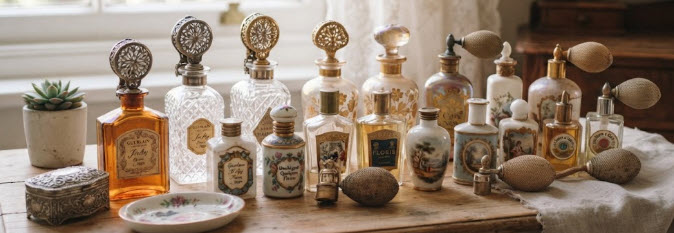
Antique Scent Bottles: A Collector’s Guide
Long before modern mass-market perfumery, fragrance was housed in vessels that were as much works of art as they were functional objects. From the precious ambergris and essential oils of ancient civilizations to the jeweled masterpieces of the Victorian era, antique scent bottles offer a fascinating window into history, fashion, and craftsmanship.
Whether you are an experienced antiquarian or someone newly captivated by their charm, collecting these miniature treasures is a rewarding and deeply immersive pursuit.
A Brief History in Miniature
The history of scent vessels spans thousands of years, reflecting the evolving tastes and technologies of human civilization:
-
Ancient Beginnings: The earliest perfume containers date back to ancient Egypt, Greece, and Rome. Crafted primarily from blown or molded glass, terracotta, and alabaster, these early vessels (often called unguentaria) held precious oils and balms used for both daily grooming and burial rites.
-
The Renaissance and Enlightenment: As trade routes expanded during the Renaissance, intricate pomanders and silver-gilt scent containers emerged. By the 18th century, European porcelain manufactories like Meissen and Sèvres began producing exquisite, hand-painted porcelain scent bottles, often mounted in delicate gold or brass frames.
-
The Victorian Golden Age: The 19th century was truly the golden age of the scent bottle. Victorians were obsessed with scent, using smelling salts in ornate glass, silver, and crystal bottles to combat the faints brought on by tightly laced corsets.
-
The Art Nouveau and Art Deco Revolutions: As the 20th century dawned, legendary houses like Lalique and Baccarat revolutionized the medium. Master glassmakers collaborated with pioneering perfumers like François Coty to create ethereal, sculptural bottles that defined the Art Nouveau and sleek Art Deco styles.
What to Look for When Collecting
Because scent bottles were made from a vast array of materials and spanned many centuries, building a collection can take many directions. Here are the key elements collectors look for:
1. Materials and Craftsmanship
-
Glass and Crystal: Look for colored glass (such as deep cobalt blues, rich cranberry reds, and uranium greens), flash-cut overlay glass, and famous signatures like Lalique, Baccarat, or Daum.
-
Precious Metals and Enamel: Silver filigree, repoussé work, and colorful Limoges or Birmingham enamel were heavily favored during the 18th and 19th centuries.
-
Exotic Mediums: Carved ivory, porcelain, tortoiseshell, and even gemstones like amethyst and agates were fashioned into rare and costly bottles.
2. Condition and Completeness
In antique collecting, condition is everything.
-
Check for chips, cracks, or deep scratches on the glass body.
-
Verify whether the original stopper is present—finding a matching, original stopper significantly increases the value and desirability of a piece.
-
Inspect metal hinges and screw caps to ensure they still function properly.
3. Hallmarks and Signatures
Turn the bottle over and look closely at the base or mounts. British silver will feature hallmarks indicating the assay office, year, and maker, while high-end art glass will often bear etched or molded signatures.
Tips for Beginning Your Collection
-
Focus Your Passion: With so many eras available, it helps to narrow your focus. You might choose to collect only Victorian chatelaine bottles, mid-century modernist glass, or porcelain figural bottles.
-
Buy from Reputable Sources: Specialized antique dealers, established estate sales, and dedicated decorative arts auctions are safer bets than unverified online marketplaces where reproductions can sometimes be mistaken for antiques.
-
Display with Care: Antique scent bottles are delicate. Display them away from direct sunlight (which can fade colored glass or damage fragile enamels) and in secure cabinets where they won’t easily be knocked over.
A Window into the Past
Collecting antique scent bottles is about much more than acquiring pretty objects. Each tiny vessel holds the ghost of a bygone era—evoking the boudoirs of European courts, the elegance of Victorian drawing rooms, and the creative explosion of early modern design.
Holding a 200-year-old crystal bottle in the palm of your hand connects you directly to the hands that carved it, the vanity table it once adorned, and the timeless human desire to capture beauty in miniature.