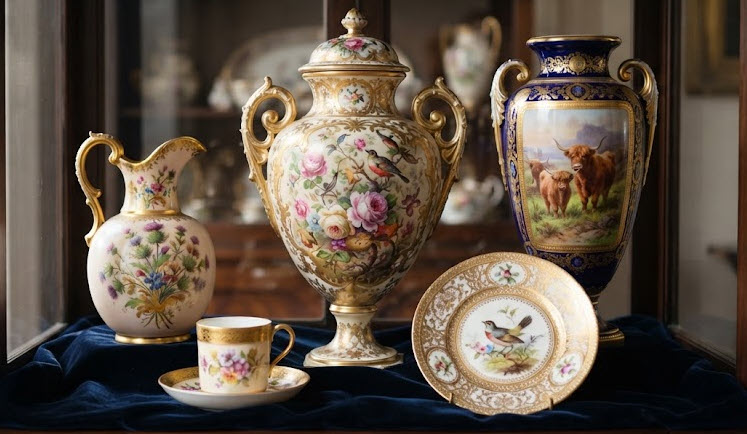
Timeless Elegance: The Magic, Masters, and Future of Royal Worcester Porcelain
Steeped in over 250 years of history, Royal Worcester stands as one of the most prestigious and revered names in British ceramic art. From delicate, gilt-encrusted cabinet plates to the luminous realism of hand-painted still-life fruit, Worcester porcelain has long captured the hearts of royalty, nobility, and discerning collectors across the globe.
1. A Rich Tapestry: The History of Royal Worcester
Founded in 1751 by Dr. John Wall and a group of businessmen on the banks of the River Severn, the Worcester Porcelain Company was born out of a desire to unlock the secret of making fine, durable porcelain. Early Worcester pieces were celebrated for their warmth, soft paste bodies, and intricate blue-and-white transfer print designs inspired by Chinese export porcelain.
Over the centuries, the factory weathered economic shifts, embraced the opulent styles of the Victorian era, and secured its royal warrant from King George III in 1789. While industrial mass production eventually reshaped the ceramics landscape—culminating in the closure of the historic Severn Street factory in 2009—the legacy of exceptional craftsmanship lives on, leaving behind a treasure trove of antique and vintage works.
2. The Masters: Legendary Artists and Their Craft
What truly sets Royal Worcester apart is its roster of master painters and modellers. Unlike many factories that relied solely on stencils or transfers, Worcester employed a stable of elite artists who treated white porcelain like a canvas. Many specialized in a single signature subject, perfecting it over a lifetime:
The Fruit Painters (Harry Ayrton, John Freeman, and Walter Sedgley): Often referred to as the masters of Worcester’s “golden age” of fruit painting, artists like Ayrton and Freeman used translucent enamel layers and multiple firings to achieve an almost glowing, hyper-realistic depiction of peaches, grapes, and berries against mossy backgrounds. Freeman was famously nicknamed “The Fruit Machine” by his colleagues due to his incredible speed and precision.
The Stinton Family (John, Harry, and James): Renowned for pastoral scenes, John Stinton and his relatives specialized in breathtaking landscapes featuring Highland cattle. Legend has it that John (Junior) Stinton painted with his pipe permanently clamped between his teeth, blending the scents of pipe tobacco and oil of cloves right into his studio workspace.
Charles Baldwyn: Celebrated internationally for his exquisite, ethereal portrayals of swans in flight framed by raised, shimmering gilt details.
George Owen: A master of reticulation (pierced porcelain), Owen carved intricate, lace-like geometric patterns into vessels before they were fired—a technique so delicate that a single mistake would ruin weeks of labor.
James Hadley & The Doughty Sisters: Hadley shaped the sculptural side of Worcester with stunning Victorian figurines, while later in the 20th century, Dorothy Doughty created world-famous, technically complex models of American and British birds.
3. A Pilgrimage: Visiting the Museum of Royal Worcester
If you fall under the spell of this porcelain, a visit to the Museum of Royal Worcester (located on Severn Street in Worcester, WR1 2ND) is an absolute must.
The Collections: Home to over 10,000 ceramic objects, the museum houses the world’s largest collection of Worcester porcelain. You can view rare Georgian masterpieces, iconic “Blush Ivory” vases from the late 19th century, and historic royal commissions—including Lord Nelson’s breakfast teapot.
Behind the Scenes: The visitor experience brings the factory floor back to life through audio recordings of former workers, original pattern books, and archival factory records.
Get Creative: For those inspired to try their hand at the craft, the museum features a ceramic studio hosting paint-your-own-pottery sessions, where staff will professionally glaze and fire your creation.
4. The Future of Collecting: Is Royal Worcester Still a Good Investment?
The collecting landscape for Royal Worcester is shifting, making it an exciting time for both seasoned connoisseurs and new enthusiasts.
The Market Niche: While everyday tableware like the popular mid-century Evesham pattern trades at modest, accessible prices, high-end artist-signed pieces remain fiercely competitive. Signed fruit-painted cabinet pieces, scarce animal studies, and pristine Blush Ivory wares regularly command strong prices at auction houses.
A Shift in Demographics: Younger generations of collectors are increasingly drawn to objects with a genuine story, tactile beauty, and hand-crafted provenance. Because Royal Worcester items are finite—and no longer being produced in the traditional manner—scarcity is driving long-term appreciation for top-tier cabinet pieces.
Smart Collecting Tips:
Always check the base for the classic Royal Worcester backstamps and date codes (which allow you to pinpoint the exact year of manufacture).
Look for clear artist signatures (such as H. Ayrton or H. Stinton).
Prioritize condition; crisp gilding, lack of hairline cracks, and flawless enamel will always dictate the highest future value.
Whether you are hunting for a single exquisite fruit-painted plate to grace a dining room wall or planning an inspiring weekend trip to Worcestershire, Royal Worcester porcelain offers a glittering window into Britain’s rich artistic heritage.