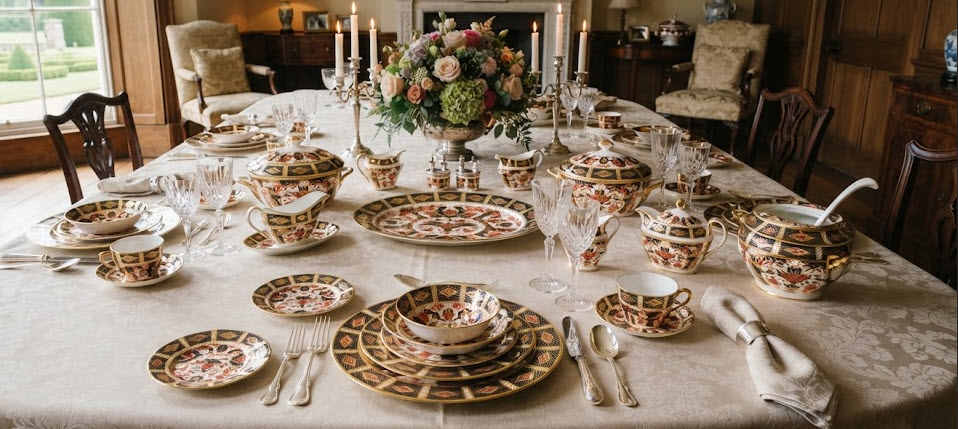
The Splendor of Porcelain: A Collector’s Guide to Royal Crown Derby
Few names evoke the rich heritage of English fine bone china quite like Royal Crown Derby. Operating continuously since the mid-18th century, the factory has transitioned from crafting delicate, candle-lit Georgian figures to adorning the dining tables of British royalty and producing whimsical modern collectibles.
Whether you are eyeing a vibrant 19th-century Imari plate or a contemporary animal paperweight, collecting Royal Crown Derby is a deeply rewarding journey through art history, chemistry, and craftsmanship.
1. Understanding the Eras: A Brief Historical Timeline
To understand what you are collecting, it helps to break Royal Crown Derby’s history down into its major production chapters. The factory’s journey spans three primary locations:
The Nottingham Road Factory (c. 1750–1848): The foundational era. Early pieces predate the “Royal” title and feature soft-paste porcelain, elegant figures, and early collaborations (including the famous Chelsea-Derby period from 1770 onwards when William Duesbury acquired the Chelsea factory).
The King Street Factory (1848–1935): When the Nottingham Road site closed, a group of loyal employees (led by Stevenson and Hancock) kept the traditional methods alive nearby on King Street, producing exquisite, hand-painted pieces that are heavily prized by purists today.
The Osmaston Road Factory (1877–Present): The grand, modern factory era. This is where the company received its royal warrants (from Queen Victoria and Edward VII) and where the iconic crown-and-d’s backstamps were heavily refined.
2. The Iconic Imari Palette
If there is one aesthetic instantly synonymous with Royal Crown Derby, it is Imari. Inspired by imported Japanese export porcelains, the traditional Derby Imari palette relies on a striking, luxurious combination of deep cobalt blue, rich iron-red, and lavish 22-karat gold gilding.
Pattern No. 2451: Perhaps the most famous and widely produced Imari pattern, introduced around the turn of the 20th century. It features dense, intricate floral and geometric motifs.
Collecting Strategy: You can focus strictly on Imari tableware (tea sets, cake plates, and dessert services) or branch out into alternative styles like the pastel floral borders, apple-green cabinet plates, or landscape-painted scenic pieces from the late 18th century.
3. Cracking the Code: Marks, Backstamps, and Dating
One of the greatest joys for a collector is detective work. Royal Crown Derby developed one of the most systematic and precise methods of dating porcelain in the entire ceramics industry.
Factory Marks: Always look at the base first. Early pieces feature incised marks, anchors, or handwritten script. Later pieces feature the crowned D’s logo.
Dating Symbols (1880–1937): From 1880 onward, the factory stamped small geometric shapes, letters, and symbols beneath the glaze to indicate the exact year of production.
Roman Numerals (1938 Onward): After 1938, the factory transitioned to using Roman numerals to date its pieces (e.g., XL or MCMLII).
4. Modern Classics: The Paperweight Phenomenon
If you want a vibrant, highly accessible entry point into collecting, look no further than the Royal Crown Derby Paperweights series, launched in 1981. From regal lions and badgers to intricate birds and farm animals, these pieces are heavily decorated in rich Imari enamels and gold.
When collecting paperweights, smart buyers look closely at the stopper on the base:
Gold Stopper: Signifies first-quality production. These command the highest market value.
Silver Stopper: Signifies second-quality pieces. Often, the flaw that caused this grade is entirely invisible to the naked eye, making silver-stoppered models fantastic bargains for beginner collectors.
Boxes and Certificates: Original packaging significantly boosts the resale value and collectibility of modern paperweights.
5. Tips for Building Your Collection
Inspect Condition Rigorously: Use a magnifying glass or jeweler’s loupe to check for “flea bites” (tiny rim chips), hairline cracks, and wear to the raised gold gilding. Rubbed or faint backstamps can heavily impact the value of antique pieces.
Choose a Niche: Because Royal Crown Derby spans over 270 years of production, trying to collect everything is impossible. Narrow your focus—whether it’s 18th-century cabinet plates, King Street-era miniatures, or a specific zoo of animal paperweights.
Buy Reputable: Always purchase from established antique dealers, specialist ceramics auction houses, or trusted platforms that guarantee authenticity and disclose any professional restoration.