

Collecting Paperweights: A Guide for Enthusiasts
While the “Classic Period” of paperweight production (1845–1860) is most famously associated with French giants like Baccarat, Saint-Louis, and Clichy, Britain has its own rich tradition that is particularly accessible for local collectors.
For a collector starting in the UK, looking beyond the French masters to home-grown artistry offers both affordability and historical fascination.
The British “Big Three”
1. Whitefriars (James Powell & Sons)
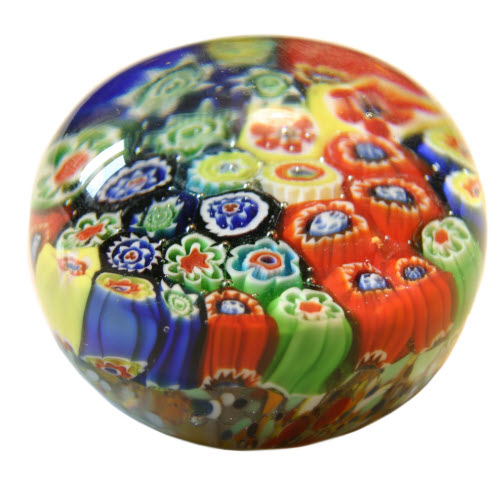
Based in London, Whitefriars is legendary among British glass collectors. Their paperweights often feature a distinctive “Monk” signature cane (a tiny silhouette of a monk) and date canes, making them easier to identify and date than many other antiques. Look for their intricate millefiori (“thousand flowers”) designs, which rival the French classics in complexity.
Key Identifier: A concave, polished base is typical. Look for the “Monk” cane hidden within the pattern.
2. Paul Ysart / Monart
A pivotal figure in Scottish glass, Paul Ysart (working first at Monart in Perth) effectively revived the art of paperweight making in the 1930s. His early works are highly prized and can often be identified by a signature “H” cane (a tribute to his apprentice, Peter Holmes, or simply his Harland works). Ysart weights often have a softer, more artistic feel compared to the geometric precision of factories.
3. Caithness Glass
Founded in 1961, Caithness revolutionized the market by introducing abstract, modern designs rather than just traditional flowers. They are famously the first company to issue each weight with a certificate and a name, making them incredibly collector-friendly.
Buyer Beware: Second-quality Caithness weights are often marked “CIIG” or “II” on the base—check for this before paying full price.
Condition is King
When browsing antique fairs or auctions, physical condition is the primary value driver.
Bruises: Look for crescent-shaped impact marks on the side. These are “bruises” and are difficult to polish out.
Polishing: A weight that looks “too” perfect or has a distorted dome may have been heavily repolished to remove damage, significantly lowering its value.
Scratches: Surface wear on the base (where it sits on the desk) is actually a good sign of genuine age; a pristine base on an “antique” should raise suspicions.
Collecting paperweights is a tactile hobby. The best advice for any beginner is to buy what you love—whether it’s a £20 modern Caithness or a rare £500 antique Whitefriars—because it will spend a long time sitting on your desk looking back at you.