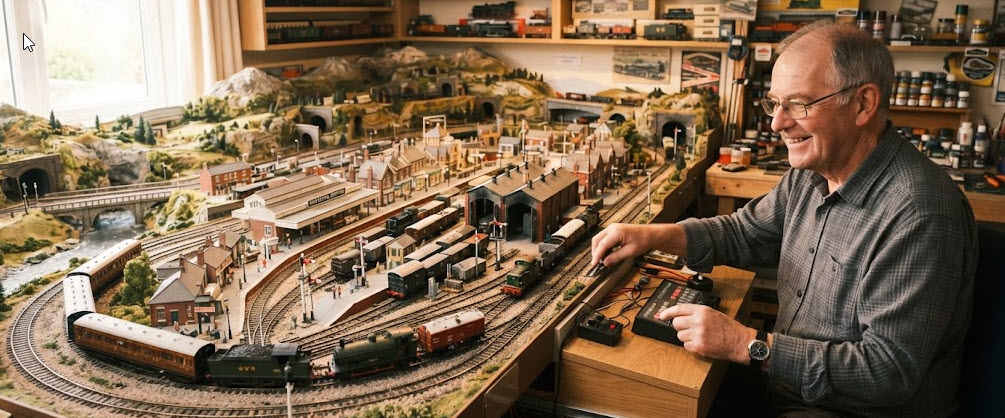
The Golden Thread of British Nostalgia: A Guide to Collecting Model Railways in the UK
There is a distinct, rhythmic magic to the hum of a miniature transformer, the faint smell of ozone and warm oil, and the sight of a meticulously weathered locomotive chugging past a hand-painted cardboard signal box. For generations, model railways have held a cherished place in the British cultural landscape.
Whether it is the childhood memory of a Christmas morning Hornby set circling the base of the tree or the painstaking adult craft of recreating a lost rural branch line of the Great Western Railway, collecting model railways in the UK is a thriving, deeply rewarding hobby.
1. Choosing Your Canvas: Scales and Gauges
Before diving into the marketplace, a collector must decide on a scale. In the UK, space is often at a premium, making the choice of scale crucial:
OO Gauge (1:76 scale): The undisputed king of the UK market. It runs on the same track width as HO gauge (16.5mm), but the trains are slightly larger to accurately represent British prototypes operating on standard gauge track. Because of its popularity, the variety of locomotives, rolling stock, and accessories is staggering.
N Gauge (1:148 scale): Perfect for those who want to model sweeping, majestic landscapes or complex terminus stations in a fraction of the space. Modern N gauge fidelity from brands like Graham Farish and Dapol rivals the detail once thought exclusive to OO.
O Gauge (1:43.5 scale): For collectors with deep pockets and generous garage or shed space. O gauge offers heavy, metal-rich models with incredible mechanical presence and sound.
Vintage & Tinplate (Hornby Dublo, Bassett-Lowke, Trix): Many collectors bypass modern hyper-detail entirely, focusing instead on mid-20th-century tinplate and die-cast models that carry a heavy dose of mid-century British industrial charm.
2. The Collecting Philosophies: Operative vs. Curative
Model railway enthusiasts generally fall into two camps, though many happily straddle both:
The Layout Builder
For these collectors, locomotives are actors on a stage. They collect with a specific Era in mind—ranging from the romantic, brass-trimmed pre-grouping era (pre-1923), through the powerhouse corporate identities of the Big Four (LNER, LMS, GWR, SR), the gritty charm of BR Steam and the iconic “BR Blue” diesel era, right up to modern-day multi-operator franchises. Every purchase must fit the historical narrative of their layout.
The Pure Collector
These enthusiasts treat locomotives and rolling stock much like fine art or stamps. They hunt down rare factory-error boxes, pristine Hornby-Dublo sets from the 1950s, or limited-edition modern releases from manufacturers like Rails of Sheffield or Kernow Model Rail Centre. For them, the joy lies in preservation, original packaging, and historical completeness.
3. Navigating the Market: Where to Find Treasures
Building a collection in the UK is a national pastime supported by a rich ecosystem:
Model Railway Exhibitions: Held up and down the country year-round (with giants like the Warley National Model Railway Exhibition historically drawing crowds by the tens of thousands), these are Mecca-like events for picking up rare secondhand rolling stock and rare kits.
Dedicated Auctions: Houses specializing in toys and trains (such as Vectis Auctions or specialized regional auctioneers) frequently handle multimillion-pound estates of pristine collections.
The Train Collectors Society (TCS): For those leaning toward vintage toy trains, joining societies like the TCS offers access to exclusive swaps, expert newsletters, and a community of kindred spirits.
Local Swap Meets and Heritage Railways: Many preserved steam railways (such as the Severn Valley Railway or the Bluebell Railway) host swap meets alongside their operating lines, marrying the hobby directly to the real-life history.
4. Tips for Starting Your Collection
Don’t Overbuy Early: It is easy to accumulate a “shelf of shame”—boxes of unbuilt kits and random locomotives that don’t match. Pick an era, a region, or a specific theme and stick to it.
Invest in Quality Track: Whether sticking to traditional DC (Direct Current) or stepping into the computerized wizardry of DCC (Digital Command Control), cheap track leads to derailments and frustration.
Condition is Everything: If collecting vintage items, original boxes and paperwork can drastically multiply an item’s value. For modern items, check that detail parts (like buffer beams and vacuum pipes) haven’t snapped off.
Final Thoughts
Collecting model railways in the UK is more than just hoarding plastic and metal; it is an act of historical preservation. Every time a miniature “Black Five” steam engine or an InterCity 125 pulls out of a tiny cardboard station, it keeps a vital piece of British engineering heritage alive on a tabletop.