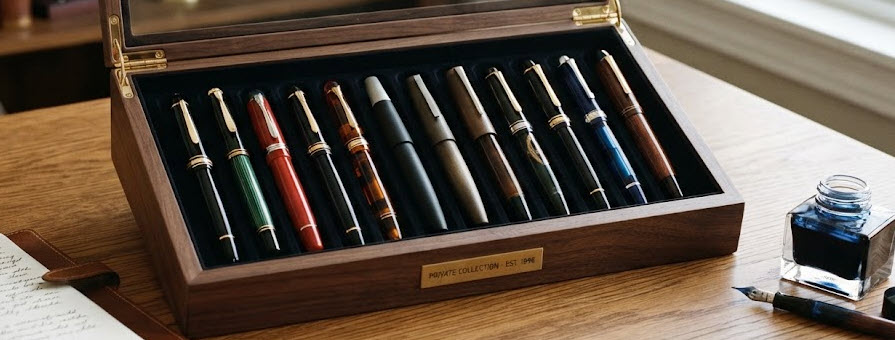
The Nib, The Ink, and The Empire: The Enduring Appeal of Collecting British Fountain Pens
While the digital age has largely reduced our daily communication to tapping on glass screens, a quiet, passionate counter-revolution is taking place in studies, desk drawers, and auction houses across the United Kingdom.
Fountain pen collecting is a global hobby, but focusing specifically on the British market opens up a fascinating time capsule of engineering ingenuity, exquisite craftsmanship, and understated British style. From the high-society desks of Whitehall to school desks in the mid-twentieth century, British pens carry a unique weight of history.
Let’s take a look at the rich heritage, legendary makers, and vibrant modern future of collecting British fountain pens.
1. A Proud Heritage: The Giants of British Pen Making
While American giants like Parker and Waterman dominated early global marketing, British manufacturers carved out an exceptional reputation for quality, aesthetic restraint, and mechanical reliability. Several historic names form the bedrock of any serious UK collection:
Onoto (De La Rue): Founded by the stationery giant Thomas De La Rue in London, Onoto was a true titan of the golden age. Their plunger-filling system, introduced in 1905, was a marvel of engineering—so reliable that it was used by explorers, statesmen like Winston Churchill, and signed historic documents worldwide. An early Onoto with a sterling silver overlay is a crown jewel for British collectors.
Conway Stewart: Established in London in 1905, Conway Stewart became synonymous with classic British elegance. Famous for their vibrant casein and celluloid finishes (such as the stunning “Duro” lines), they were often dubbed the “Parker of Britain.” They were famously favored by Winston Churchill, who appreciated a stout, reliable British pen.
Mabie Todd & Co. (“Swan”): Originating in New York but deeply rooted in London manufacturing from the late 19th century onward, “Swan” pens are legendary among vintage hunters. Their 14ct gold nibs are particularly prized today for their incredible flexibility, offering effortless line variation.
Mentmore & Platignum: Capturing the more accessible, everyday side of British writing history, Mentmore (and later Platignum) manufactured affordable, stylish lever-fillers and moulded plastic pens in East London. Platignum introduced interchangeable nib units to the British public, making them ubiquitous in classrooms through the post-war decades.
Wyvern: Based in Leicester rather than London, Wyvern built a stellar reputation for dependable, high-quality piston and lever-fillers, recently enjoying a wave of renewed appreciation thanks to features on programs like The Repair Shop.
2. Anatomy of the UK Market: What Collectors Hunt For
If you are starting or expanding a collection focused on British pens, certain features command immediate respect and value:
The Filling Mechanism: Vintage British pens feature everything from traditional eye-droppers and early plunger systems (Onoto) to standard lever-fillers and button-fillers (Conway Stewart and Mentmore). Working restoration-grade mechanisms or pens expertly restored by specialist nib meisters always command a premium.
The Nibs: British makers produced some of the finest 14ct gold nibs in the world. Collectors specifically look for semi-flex or full-flex nibs that respond to hand pressure, creating expressive, characterful handwriting styles that modern stiff steel nibs simply cannot replicate.
Celluloid and Casein Material: Pre-WWII British pens often utilized vibrant, marbled, or patterned celluloid. Finding a pen with minimal discoloration (a common issue where old plastics turn brown or amber over time) is a major coup.
3. The Modern Renaissance and the Future
The future of the British fountain pen market is surprisingly vibrant. While mass manufacturing shifted overseas decades ago, a passionate revival of British craftsmanship has taken root.
The Revival of Heritage Brands: Names like Conway Stewart have been successfully resurrected, producing ultra-luxury, hand-turned resin and precious metal fountain pens right here in the UK, often targeted at collectors, institutions, and commemorative events.
Independent British Makers: A new wave of independent turners and artisans are crafting bespoke pens from stabilized woods, acrylics, and ebonite, proving that the love for a tactile writing instrument is far from dead.
The Community: The UK pen show circuit—including events like the London Writing Equipment Show—draws massive crowds of international and domestic collectors. Younger generations, seeking an antidote to digital fatigue and screen burnout, are increasingly discovering the mindfulness and tactile joy of putting fountain pen ink to paper.