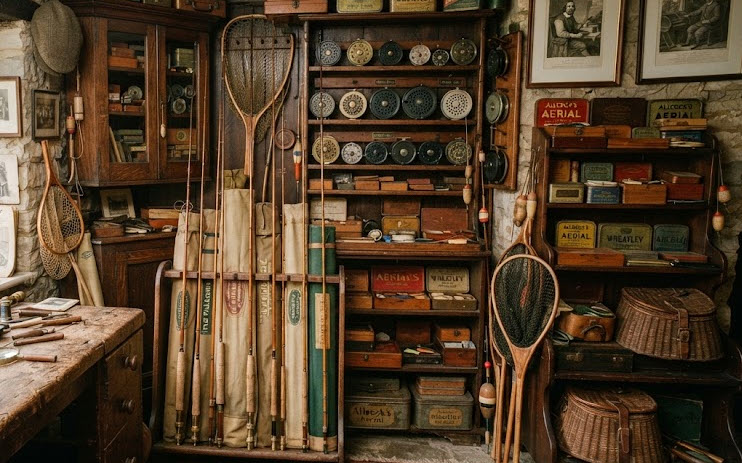
Welcome to the fascinating world of vintage and antique fishing tackle collecting! Even without a background in fishing, you’ll find that this hobby is rich in history, craftsmanship, and nostalgia. In the UK, collectors look for everything from exquisite handcrafted rods to bizarre Victorian gadgets.
The primary items that UK collectors target span several distinct categories:
1. Fishing Reels (The Crown Jewels of Collecting)
Reels are often the most prized and valuable items in a collection. Collectors look for specific eras, materials, and legendary makers:
Centrepin Reels: Large, free-running reels that spin on a central axis. Notable examples include the famous Allcock Aerial or Coxon Aerial reels, which command high prices among coarse fishing enthusiasts.
Hardy Reels: Hardy of Alnwick is the ultimate holy grail of UK tackle collecting. Collectors hunt for iconic models like the Hardy Perfect, St. George, and Silex.
Brass and Wooden Reels: Victorian and Edwardian era reels made from polished brass, mahogany, or ebonite (an early hard rubber). Many feature “star-back” or “strap-back” wooden designs.
Bakelite and Early Fixed-Spool Reels: Mid-20th-century plastic/Bakelite reels (like early Mitchell or Altex spinning reels).
2. Fishing Rods
While modern anglers use carbon-fibre, collectors prefer the look, feel, and artistry of older materials:
Split-Cane Bamboo Rods: Handcrafted rods made from split bamboo sections glued together. Master makers like Edward Barder, Sharpes of Aberdeen, or early Hardy cane rods are highly sought after.
Greenheart and Whole Cane Rods: 19th-century and early 20th-century rods made from heavy tropical woods or composite materials before split-cane became dominant.
3. Artificial Lures and Baits
Old artificial lures are miniature works of art, often crafted from wood, metal, or glass:
Antique Spoons and Spinners: Early metal spinning baits made by legendary makers like Gregory or Geen.
Glass-Eyed Lures: Lures featuring tiny glass eyes (very popular and valuable with pike and predator collectors).
Gutta-Percha and Rubber Baits: 19th-century artificial frogs, fish, and minnows made from early rubber compounds.
4. Floats and Fly Tying Memorabilia
Vintage Floats: Hand-painted cork, quill, and porcupine-quill floats. Famous competition anglers’ floats (like those made by Ivan Marks) or delicate floating accessories are often displayed in frames or wooden winders.
Antique Fly Boxes and Flies: Aluminum, brass, or leather-bound pocket boxes (such as those by Richard Wheatley) packed with handcrafted trout and salmon flies—especially those tied by master artisans like Megan Boyd.
5. Quirky Gadgets and Accessories
Our Victorian and Edwardian ancestors invented a wide array of unusual tools for the waterside:
Pike Gags and Scissors: Spring-loaded steel devices used to hold a pike’s mouth open safely.
Fisherman’s Priests (“Fish Knockers”): Heavy, beautifully turned wood, bone, or metal clubs used to humanely dispatch a caught fish.
Gaffs: Telescopic or folding hooks used to haul large fish ashore—some designed ingeniously (or alarmingly) to fold up and hide down a poacher’s trouser leg.
Leather Creels and Game Bags: Woven willow creels (baskets for carrying fish) and heavy leather or canvas bags made by brands like Brady.
Pocket Scales: Miniature brass spring balances (like Salter scales) for weighing catches.
6. Ephemera and Literature
Many collectors don’t just collect the gear; they collect the paper history attached to it:
Trade Catalogues: Vintage annual guides and catalogues from companies like Hardy or Allcocks (dating back to the late 19th and early 20th centuries).
Angling Books: First editions or leather-bound volumes by iconic British writers like Izaak Walton (The Compleat Angler), Chris Yates, or Rod Hutchinson.
7. Taxidermy (Cased Fish)
Though more niche and requiring dedicated display space, antique glass-fronted wooden display cases containing preserved, hand-painted fish (often mounted by famous taxidermists like J. Cooper & Sons) are prized centrepieces for serious collectors.