Pratt Ware Pot Lids and Advertising Pot Lids:
Collecting Victorian’s Most Colourful Treasures
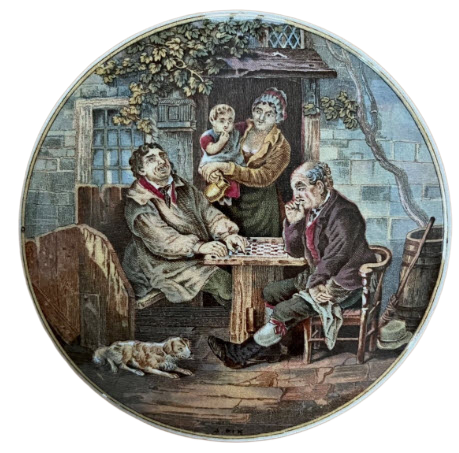
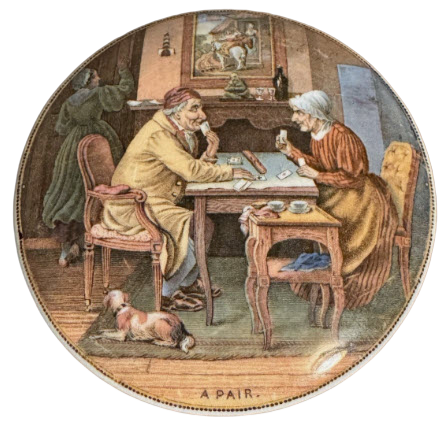
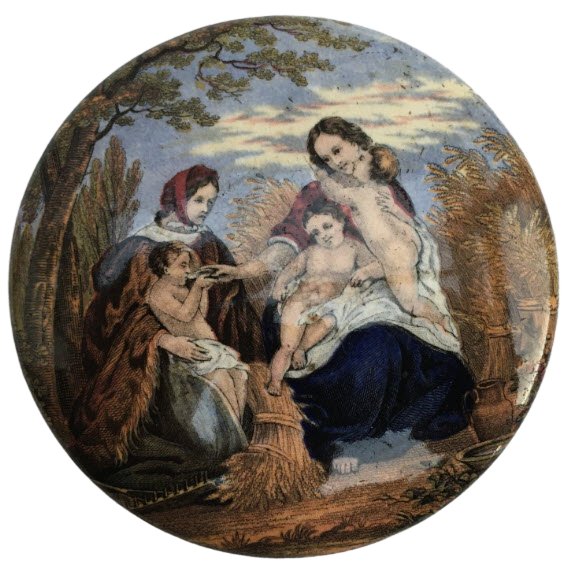
Pratt Ware represents one of the most desirable and visually striking categories of English ceramic collectibles. These exquisite hand-coloured transfer-printed pot lids emerged from the brilliant innovation of Felix Edward Pratt and his brother Richard, who established F. & R. Pratt & Co. at the Fenton Potteries in Staffordshire during the early 19th century.
The true genius behind Pratt’s success came when Felix employed Jesse Austin, a gifted artist and engraver who joined the factory around 1843. Austin’s contribution cannot be overstated—over four decades, he produced more than 550 different polychrome designs. Using an advanced process adapted from George Baxter’s colour printing patent, Austin created pot lids using four separate printing plates (blue, red, yellow, and black) to achieve the vibrant, multi-coloured decoration that characterises these pieces.
What makes Pratt Ware remarkable is not merely technical excellence, but historical documentation. The designs showcase Victorian life in fascinating detail—British and European landmarks, Shakespearean scenes, the Crimean War, notable figures, and everyday commerce. Many lids directly referenced their contents: floral designs adorned ladies’ cosmetics, bears indicated bear’s grease products, and Pegwell Bay celebrated potted shrimps.
Advertising pot lids represent a fascinating subcategory of this broader field. Between approximately 1830 and 1930, manufacturers of toothpaste, cold cream, food pastes, hair preparations, ointments, and pharmaceutical products all utilised these transfer-printed ceramics as functional advertising. Over 8,500 different advertising examples have been catalogued, with businesses using them as mobile marketing vehicles—products disposed of after use created opportunities for archaeological discovery decades later.
The collecting market has evolved considerably. While the 1970s witnessed exceptional prices—rare lids commanding four-figure sums—the market subsequently cooled. Today, astute collectors can acquire fine undamaged examples from £30 to £100, with rare pieces exceeding £3,000. Condition remains paramount: bright, sharp colours and precise registration significantly outvalue examples showing ghosting or fading.
Pratt Ware extends beyond pot lids to encompassing related domestic items—tea wares, tobacco jars, and decorative pieces—all bearing the distinctive Austin designs. These pieces offer collectors multiple entry points into this remarkable Victorian ceramic tradition.
For serious collectors, Historical & Collectable continues to hold regular specialist auctions, ensuring liquid markets for both common and exceptional examples. Whether pursuing individual lids or building comprehensive collections, Pratt Ware pot lids represent affordably accessible Victorian artistry with genuine historical significance.
Leamington Spa Chemists with Advertising Pot Lids (1850-1910)
Victorian advertising pot lids represent a fascinating aspect of Leamington Spa’s commercial history. These ceramic containers, typically used for tooth paste, cold cream, ointments, and other pharmaceutical products, featured transfer-printed advertisements on their tops and have become highly collectible items. Based on auction records, collector databases, and historical references, the following chemists operated in Leamington Spa during the period 1850-1910 and produced pot lids with advertisements:
1. Sansom
Products: Tooth Paste
Details: Sansom produced both rectangular and round pot lids in various sizes (2.5 inches and 2.75 inches diameter). The lids featured black transfer printing with text reading “SANSOM’S TOOTH PASTE / SANSOM, CHEMIST / LEAMINGTON SPA”. These are among the more commonly found Leamington pot lids in collector circles.
2. Mrs Williams
Products: Nutritive Cream (for restoring weak hair and baldness)
Address: Royal Leamington Spa
Period: 1870s-1880s
Details: Mrs Williams produced multiple sizes of pot lids, with the most common being approximately 2.75 inches (70mm) in diameter. The lids featured a coat of arms in the centre and text reading “MRS WILLIAMS / NUTRITIVE CREAM / FOR RESTORING WEAK HAIR / AND FOR BALDNESS / ROYAL LEAMINGTON SPA”. Some variations include “Mrs Williams’s / Pure Herbal / Nutritive Cream”. These pot lids were also marketed as “Williams Herbal Nutritive Cream”.
3. Edward Thornton
Products: Anthracoline (tooth paste)
Address: 37 Warwick Street West, Leamington
Details: Thornton’s pot lids are distinctive for their pink over-glaze background with fancy borders. The text reads “EDWARD THORNTON / 37 WARWICK ST WEST / LEAMINGTON”. The anthracoline product was a popular Victorian tooth cleaning preparation. Lids are typically around 3.1 inches in diameter.
4. A. Waldron (late Thornton)
Products: Anthracoline
Period: Post-Thornton (likely 1880s-1900s)
Details: A. Waldron took over the anthracoline business from Thornton and continued producing pot lids. The lids feature text reading “A.WALDRON LATE THORNTON” along with pricing (1/6) and manufacturing details from “BARCLAYS & SONS / FARRINGTON STREET / LONDON”. The lids also sometimes state “Thornton’s Anthracoline prepared by… Waldron Leamington”. These are found in various sizes around 3.2-3.5 inches diameter.
5. W.S. Robinson (late Norman)
Products: Anthracoline
Details: W.S. Robinson operated the business previously run by someone named Norman. Pot lids were produced with text “Thornton’s Antheacoline by WS Robinson late Norman of Leamington”. This suggests Robinson may have taken over Norman’s chemist shop and continued selling Thornton’s anthracoline product under license or as a stockist.
6. Barrett
Products: Cold Cream (Otto of Rose)
Details: Barrett produced particularly large pot lids (3.25 inches diameter) for cold cream preparations. The text reads “OTTO OF ROSE / COLD CREAM / PREPARED BY BARRETT / FAMILY & DISPENSING CHEMIST / LEAMINGTON”. Otto of Rose (also known as Attar of Roses) was a popular fragrance ingredient in Victorian cosmetics, made from rose petals.
7. James Spilsbury
Address: 35 Bath Street, Leamington Spa (also recorded as 2 Regent Place)
Period: 1870s onwards
Details: James Spilsbury was a manufacturing chemist and the father of the famous forensic pathologist Sir Bernard Spilsbury, who was born above the shop in 1877. While there is strong evidence that Spilsbury operated as a manufacturing chemist during this period, specific pot lids bearing his name have not been definitively confirmed in the research, though his status as a “manufacturing chemist” suggests he likely produced packaged pharmaceutical products. The shop still operates as a chemist today and is marked with an English Heritage blue plaque.
Additional Context
Collector Interest: A collector on social media mentioned having “55 different lids from the small town of Leamington Spa”, indicating that the actual number of chemists producing pot lids may have been higher than currently documented, with many variations and rare examples still being discovered.
Reference Works: The definitive catalogue “Historical Guide to Advertising Pot Lids” by Houghton, Layden & Taylor (published after 11 years of compilation) documents over 8,500 UK and Irish advertising pot lids from approximately 1830-1930. This work includes specific Leamington Spa examples and has been updated with supplements adding hundreds more examples.
Manufacturing: Most Leamington pot lids were produced by Staffordshire potteries such as F. & R. Pratt of Fenton, who specialized in multicoloured transfer-printed pot lids, though some were produced by other manufacturers including T.J. & J. Mayer. The chemists would commission these lids with their specific advertising text and branding.
Products: The main categories of products sold in these pots were:
Tooth pastes and dentifrices (Sansom, Thornton, Waldron)
Hair treatments and restoratives (Mrs Williams)
Cold creams and cosmetics (Barrett, Mrs Williams)
Ointments and salves (various)
Valuation: Undamaged Leamington Spa pot lids can range from £30-80+ depending on rarity, condition, and the quality of the print. Particularly rare examples or those in exceptional condition can command significantly higher prices at specialist auctions.
The pot lids from these Leamington chemists represent an important record of Victorian commercial life in this spa town, which experienced rapid growth during the 19th century following the popularization of its mineral waters. The variety of products advertised—from tooth preparations to hair restoratives—reflects both the pharmaceutical practices of the era and the entrepreneurial spirit of Leamington’s business community during its heyday as a fashionable health resort.