The Enduring Art of Moorcroft Pottery Collecting
Moorcroft pottery stands as one of Britain’s most prestigious art potteries, attracting collectors worldwide since its inception in 1897. For those building a collection, understanding what makes these ceramics special is essential to appreciating their value and authenticity.
A Legacy of Handcrafted Excellence
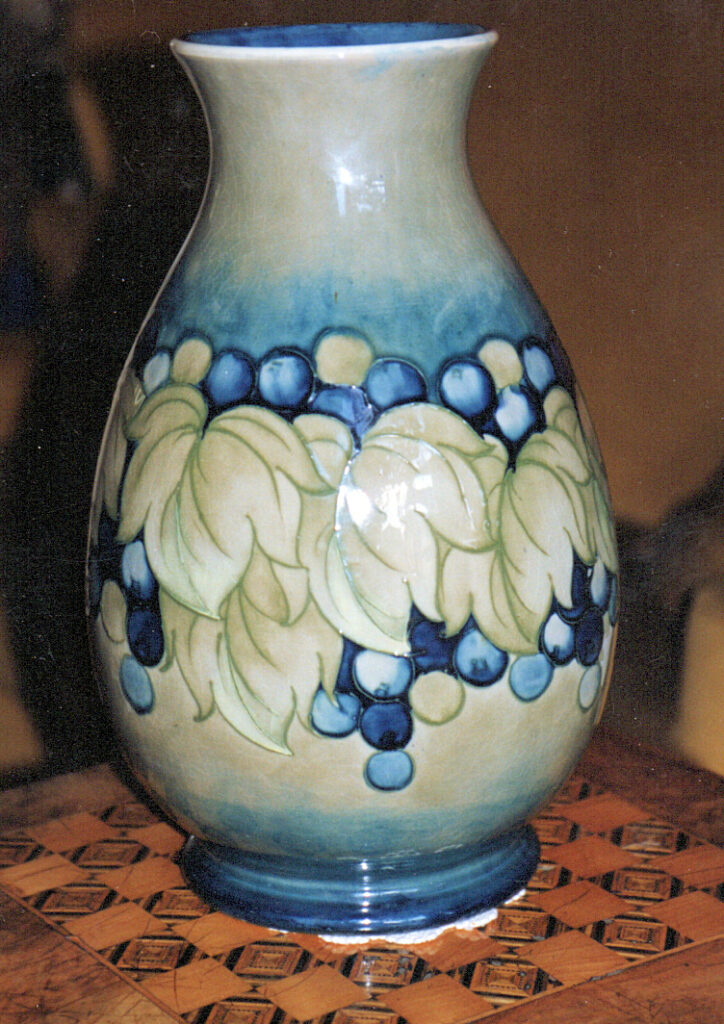
William Moorcroft’s revolutionary approach to pottery design transformed the industry. His iconic Florian Ware, featuring hand-drawn floral motifs and the distinctive tube-lining technique, captured imaginations at the 1904 World’s Fair in St. Louis. Today, the brand continues this tradition of meticulous handcraftsmanship, with each piece individually decorated using methods virtually unchanged over a century. This commitment to artisanal production ensures every Moorcroft piece tells a story through its unique glaze interactions and carefully applied patterns.
What Drives Collector Value
Early pieces bearing William Moorcroft’s signature command premium prices, particularly classic patterns such as Pomegranate, Claremont, Poppy, and Iris from the 1900–1930 period. A 1913 Pomegranate exhibition plaque famously achieved £19,200 at auction, nearly five times its estimated value. However, rarity extends beyond age—discontinued patterns and limited-edition contemporary pieces have gained significant collector traction recently.
Authentication and Dating Essentials
Every genuine Moorcroft piece bears base markings identifying its production year, maker, and tubeliner. Pieces made post-1990 include annual ciphers; for instance, an arrow indicates 1990 production. Genuine earthenware Moorcroft maintains opacity when light shines through it—counterfeits using porcelain become translucent.
Building Your Collection
Condition matters significantly; chips, crazing, or restoration reduce value substantially. Whether you’re pursuing investment-grade early William Moorcroft pieces or collecting modern patterns that speak to your aesthetic sensibilities, Moorcroft collecting rewards patient research and informed purchasing decisions. The factory tour at Moorcroft Heritage Centre offers invaluable insights into these timeless ceramics’ creation
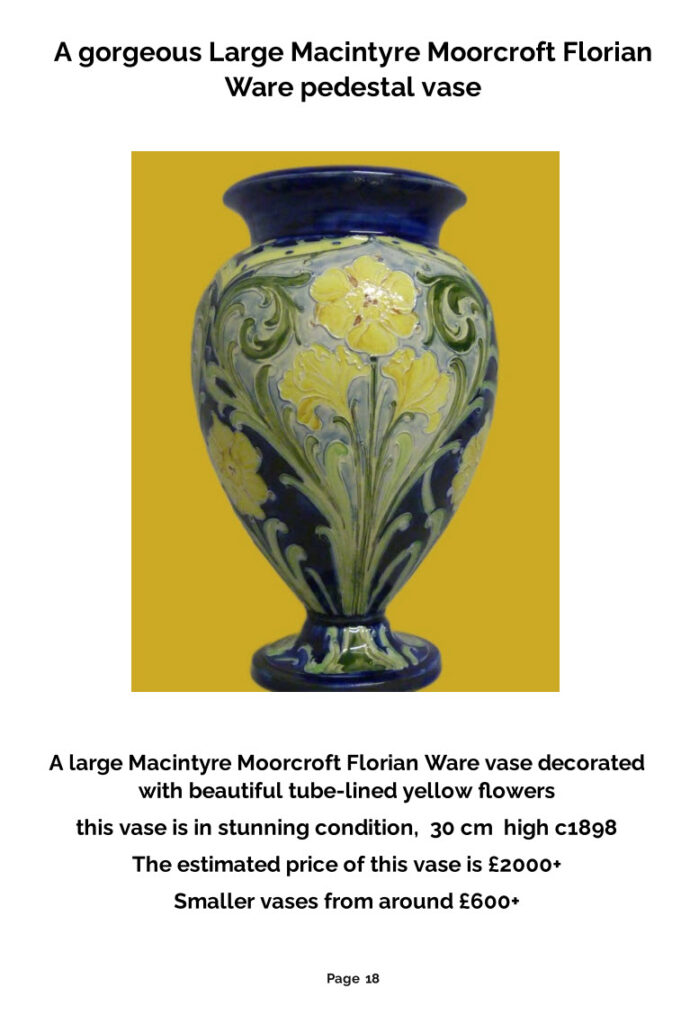
The vase is from a page in our new Moorcroft Price Guide.
Find out more by clicking the link here.
Collecting Moorcroft: A Collector’s Guide
Moorcroft stands as one of Britain’s most celebrated art pottery makers, founded by William Moorcroft in 1897 whilst working for James Macintyre & Co. His innovative Florian Ware, employing the distinctive technique of tube-lining—a raised slip method creating outlined designs—won a prestigious gold medal at the 1904 St Louis International Exhibition. Moorcroft’s artistic vision impressed prestigious retailers including Liberty of London, Tiffany & Co., and Harrods, who actively stocked his wares.
Product Categories:
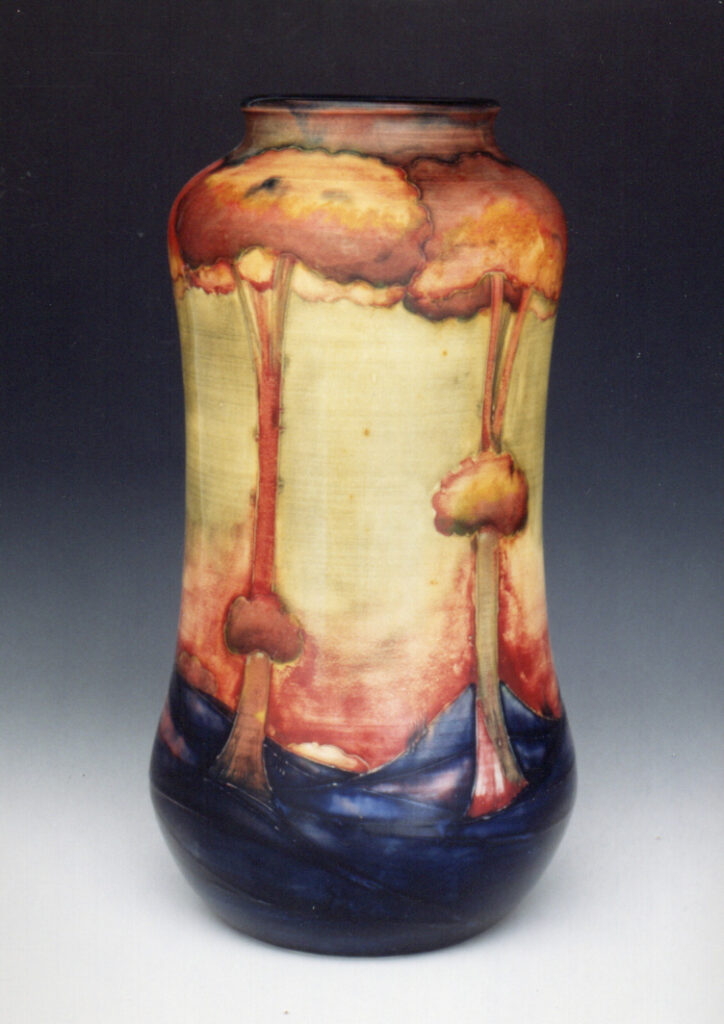
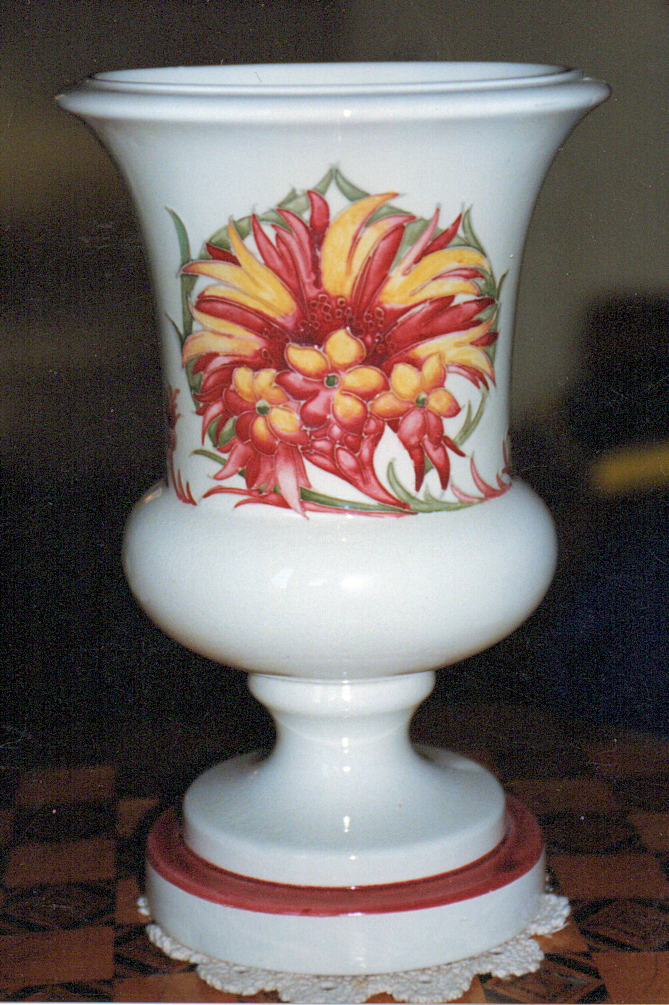
Moorcroft’s most celebrated patterns emerged during the Macintyre period (1897-1912), featuring organically-inspired florals and landscapes. Notable designs include Poppy (1898), Hazeldene landscapes, Claremont with distinctive toadstools, Tudor Rose, and Pomegranate. After establishing his own Cobridge factory in 1913, William continued developing signature patterns. The 1921 introduction of high-temperature flambé glazes created lustrous wares now hugely popular with collectors. Walter Moorcroft, who succeeded his father in 1945, introduced exotic flowers and vibrant colourways.
Identifying Your Pieces:
Authenticity relies on consistent base markings—every genuine piece bears impressed or painted marks identifying maker, year, painter, and tubeliner. Early Florian ware (c.1897-1905) features hand-painted signatures in green, whilst later William pieces carry impressed “Potter to HM Queen” marks from 1928. Modern pieces employ year cyphers from 1990 onwards. All genuine Moorcroft is earthenware—porcelain fakes are significantly lighter and translucent.
Collector Value:
Early William Moorcroft pieces command exceptional prices, with fine examples reaching thousands of pounds. Rare patterns like early Florian and Hazeldene regularly fetch £1,000+. Even accessible later pieces remain highly collectable, with general market prices starting around £50-£200