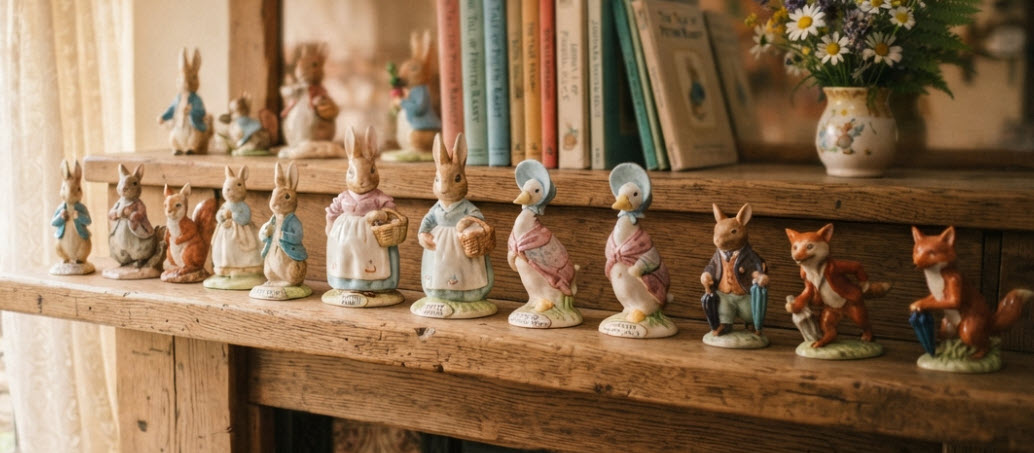
The Magic of Beswick Beatrix Potter Figures
There are few objects in the world of vintage ceramics that evoke such an immediate wave of warmth and familiarity as a Beswick Beatrix Potter figurine. With their hand-painted details, expressive postures, and tiny jackets, these figures step straight out of the pages of British children’s literature and onto our bookshelves.
For generations, collecting these charming pieces has been a beloved pastime—bridging the gap between fine ceramic art and childhood nostalgia.
History and Production: How They Came to Life
The story of these figures begins with the partnership between the legendary author Beatrix Potter and the Potteries-based firm J.W. Beswick Ltd of Longton, Stoke-on-Trent.
The Genesis (1947–1948): While other potteries had experimented with character wares, Arthur Beswick secured official permission from Beatrix Potter’s publisher, Frederick Warne & Co., to produce the very first ceramic figures. The first commercial figures were introduced around 1948, modeled meticulously from Potter’s original watercolor illustrations.
The Golden Era of Beswick (1950s–1980s): Under the guidance of skilled modelers and painters, the collection expanded rapidly. Figures like Peter Rabbit, Jemima Puddle-Duck, Tom Kitten, and Squirrel Nutkin became household staples.
Corporate Shifts (1969–2002): Beswick was acquired by Royal Doulton in 1969, though production of the Beatrix Potter line under the Beswick name continued for years. Later production transitioned under Royal Albert branding before the historic Gold Street works factory ultimately closed its doors in 2002.
The Clues on the Bottom: Understanding Backstamps
One of the most fascinating aspects of collecting Beswick Beatrix Potter figures is “reading” their bases. The stamp underneath tells the history of when a specific piece was manufactured:
The Gold Oval Backstamp (BP2, 1955–1972): Highly sought after by collectors, featuring gold script denoting the character.
The Brown Line Backstamp (BP3, 1973–1988): A transition to brown lettering with various copyright lines.
The Royal Albert Crowns (BP5 & BP6, 1989–1998): Later eras where production shifted under the Royal Albert banner.
(Note: The date often stamped on the base—such as 1948 or 1951—refers to the year the model was first copyrighted, not the exact year your specific figure was molded!)
Why Do People Collect Them?
People are drawn to Beswick Beatrix Potter figures for several deeply personal and aesthetic reasons:
Pure Nostalgia: For many, owning a Peter Rabbit or Benjamin Bunny figure brings back memories of being read to as a child or visiting a grandparent’s home.
Interior Styling: In modern homes, a single vintage Beswick figure placed among old books, wooden furniture, and vintage ceramics adds a sophisticated, understated touch of whimsy without making a room feel overly themed.
The Joy of the Hunt: With dozens of characters, color variations, and rare model poses, the collection offers an attainable yet engaging challenge for completionists and character-specialists alike.
Current Market Popularity and Auction Prices
Are they popular right now? Yes, but with a nuanced market. While the craze of the 1980s and 90s speculative boom has cooled, a steady, passionate core of collectors keeps demand robust.
Everyday Figures (£20 to £80 / $30 to $100): Most common characters (like standard editions of Peter Rabbit or Flopsy, Mopsy and Cottontail) in good condition are widely available and very affordable.
Rare Variations and Early Pieces (£300 to £800+): Rarity dictates high value. Scarcely produced characters (such as The Duchess or early prototype colorways) regularly command hundreds of pounds at specialized ceramics auctions. For instance, rare colorway trials or unusual backstamp variations have achieved upwards of £700–£800 when conditions are pristine.
Are They a Good Investment for the Future?
If you are looking at Beswick figures strictly as a high-yield financial stock portfolio, ceramics rarely act as guaranteed financial investments. Tastes change, and mass-produced lines mean that common characters will likely stay modest in price.
However, as a collecting item, they are wonderful. Exceptional, early-period pieces, rare colorways, and figures in mint condition with sought-after backstamps continue to hold their value well because their supply is strictly finite (since the factory closed permanently).
The best approach is to collect them for the joy they bring. Buy a figure because it reminds you of a cherished story, a beloved book, or a specific moment in time—and treat any future appreciation in value as a delightful bonus.