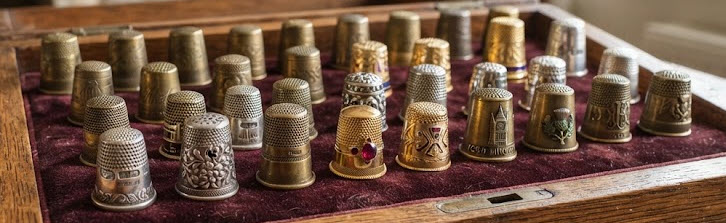
The Charming World of Thimble Collecting: A Comprehensive Guide to Types, Metals, and History
While today we might view them as simple household tools tucked away in sewing kits, thimbles have a rich, fascinating history that spans centuries. Once essential items for protecting fingers during hand-sewing, thimbles have evolved into cherished collector’s items worldwide.
Whether you are an experienced collector or just starting out on your English captables website journey, this comprehensive guide covers everything you need to know about collecting thimbles, including the diverse types and the precious and base metals from which they are crafted.
A Brief History of the Thimble
Before diving into the materials, it helps to understand why thimbles hold such enduring appeal. Early thimbles date back to ancient times, crafted from leather, bone, horn, and wood. However, the metal thimble as we recognize it began to flourish in Europe during the Middle Ages.
By the 17th and 18th centuries, thimble manufacturing became an art form, particularly in European hubs like Nuremberg, Germany, and later in England. Thimbles were often given as tokens of affection, engagement gifts, or commemorative pieces for royal coronations and jubilees, making them deeply tied to social history.
Metals Used in Thimble Crafting
One of the most exciting aspects of collecting thimbles is the vast array of metals used over the centuries. Different eras and regions favored different materials, reflecting the technology and artistic tastes of the time.
1. Gold
Gold thimbles are the crown jewels of many collections. Because gold is soft, pure gold thimbles are rare and usually date from the 18th and 19th centuries, often custom-made for wealthy patrons. Many feature intricate repoussé work, chasing, or gemstone settings (such as rubies or diamonds) embedded in the rim.
2. Silver and Sterling Silver
Silver is perhaps the most common precious metal found in thimble collections. Sterling silver thimbles were widely produced in Victorian England and America. Collectors can find:
Plain Polished Silver: Classic everyday sewing tools of the well-to-do.
Filigree Silver: Delicate wirework patterns, often originating from regions like Malta, China, or Scandinavia.
Repoussé and Embossed Silver: Featuring raised floral, scroll, or figural motifs hammered from the inside out.
3. Pinchbeck and Rolled Gold (Gold-Filled)
As gold became more expensive, manufacturers developed alternative ways to create the golden look affordably. Pinchbeck (an alloy of copper and zinc invented in the 18th century) and later rolled gold or gold-filled metals allowed makers to craft durable, beautiful thimbles that had the luster of solid gold without the steep price tag.
4. Brass and Bronze
Brass is one of the earliest metals used for mass-produced thimbles. Nuremberg, Germany, was famous for its brass “latten” thimbles in the 16th and 17th centuries. Bronze and brass thimbles are rugged, often develop a rich patina over time, and frequently feature deep, hand-punched dimples characteristic of early manufacturing techniques.
5. Pewter and Britannia Metal
Pewter—an alloy primarily consisting of tin—was widely used for utilitarian thimbles. Because pewter is a softer metal, older pewter thimbles often show significant wear from actual sewing use, giving them a wonderful rustic charm. Britannia metal, a harder and shinier form of pewter, became popular in the 19th century.
6. Steel and Cut Steel
During the Industrial Revolution, steel thimbles became popular due to their strength. Some exceptional Victorian steel thimbles are adorned with tiny, faceted cut steel beads riveted onto the surface, creating a sparkling, diamond-like effect when caught in the light.
Types and Styles of Thimbles to Collect
Thimbles aren’t just categorized by metal; they also vary wildly by purpose, design, and special features:
1. Commemorative and Souvenir Thimbles
Popularized in the 19th and 20th centuries, souvenir thimbles were bought as mementos of travels, world fairs, or historic national events (such as Queen Victoria’s Jubilees, coronations, or political milestones). They often feature enamel crests, printed landmarks, or engraved dates.
2. Advertising Thimbles
Companies in the late 19th and early 20th centuries used thimbles as promotional giveaways. You can find vintage thimbles stamped or enameled with the names of local dry goods stores, sewing machine companies (like Singer), thread manufacturers, and pharmaceutical brands.
3. Tailor’s and Open-Ended Thimbles (Tailor’s Thimbles / Thumb Guards)
Unlike standard enclosed thimbles, tailor’s thimbles often feature an open top or a rigid rim designed to protect the side of the finger rather than the tip. These were heavily utilized in heavy-duty tailoring where the palm or side of the hand pushed the needle.
4. Figural and Novelty Thimbles
For whimsical collectors, figural thimbles are a treat. The top of the thimble is shaped into an animal head, a human character, a flower bud, or even a miniature house. When lifted or inverted, some novelty thimbles double as tiny containers or seals.
5. Puzzle and Trick Thimbles
Some rare antique thimbles were crafted with clever mechanical elements, hidden compartments, or trick bottoms, popular as conversation pieces during the Victorian era.
Tips for Starting Your Thimble Collection
Focus Your Niche: Because there are thousands of variations, it helps to narrow your focus—such as collecting only sterling silver Victorian thimbles, English commemorative pieces, or brass antique specimens.
Inspect the Dimples: On older hand-made thimbles, the dimples (indentations designed to catch the needle) are irregular because they were punched by hand individually. Machine-made modern thimbles have perfectly uniform, geometric grids.
Check for Hallmarks: Precious metal thimbles often carry hallmarks indicating the maker, city, metal purity, and year of manufacture. Investing in a good magnifying loupe will help you spot these tiny treasures.
Proper Storage: Display your collection in a specialized glass-topped shadow box or a vintage printer’s tray to protect them from dust while showing off their intricate details.
Whether you are drawn to the gleaming elegance of sterling silver or the rugged antiquity of a Nuremberg brass thimble, collecting these miniature works of art offers a wonderful window into social, industrial, and artistic history. Happy collecting!