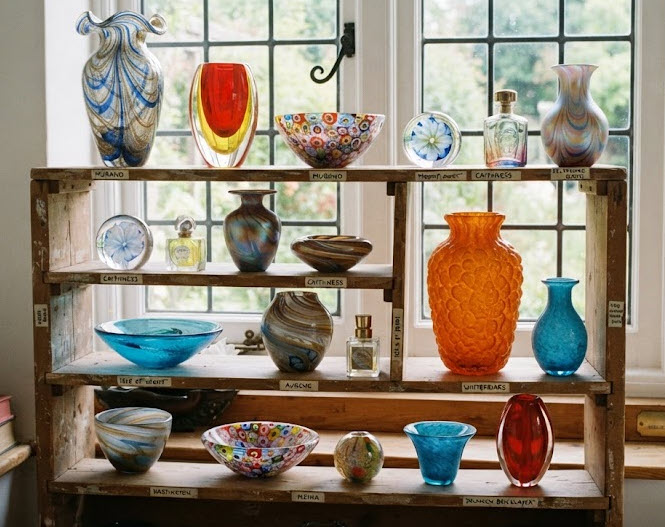
The Vibrant World of Glass Collecting: A Guide to Coloured, Murano, Whitefriars, Scottish, and Rare Makers
There is a mesmerizing magic to art glass. When light catches a piece of coloured glass—refracting through brilliant ruby reds, deep cobalt blues, or swirling amber sommerso—it brings a room to life in a way few other collectibles can. Whether you are drawn to the sleek mid-century modern aesthetic, the textured organic shapes of Venetian masters, or the storied heritage of British studio glass, collecting art glass offers an endlessly rewarding journey.
If you are looking to start or expand your collection, here is a comprehensive guide on how to approach the hobby, what treasures to hunt for, and where the market is heading.
What to Collect: Key Traditions and Makers
When building a collection of coloured glass, focusing on iconic regions, historical studios, and exceptional makers helps give your display a cohesive and historically rich narrative. Here are some of the most sought-after categories:
1. Murano Glass (Italy)
No glass collection is complete without a nod to the island of Murano, near Venice, which has been the global heart of glassmaking for centuries.
The Styles: Murano glass is famous for breathtaking techniques. Look out for Sommerso (layered colours creating a luminous depth), Millefiori (thousand flowers mosaic patterns), Latticino (fine white glass threads), and the striking, organic forms produced during the mid-20th century.
Key Makers: Look for pieces by legendary houses and designers such as Venini, Barovier & Toso, Flavio Poli (for Seguso Vetri d’Arte), and Aurelio Zanetti.
2. Whitefriars Glass (United Kingdom)
As one of Britain’s most historic glassworks—tracing its roots back to the 17th century before closing in 1980—Whitefriars is a cornerstone of British collectible glass.
The Styles: Whitefriars is best known for its textured glassware introduced in the 1960s and 70s, designed largely by Geoffrey Baxter. Iconic shapes like the “Barnacle,” “Cello,” “Bark,” and “Drill” vases—often rendered in vibrant shades like Kingfisher Blue, Tangerine, Ruby, and Meadow Green—are instantly recognizable and highly coveted.
Why Collect Them: Their distinct modernist silhouettes capture the spirit of post-war design and look incredible whether displayed individually or grouped as a colour-blocked collection.
3. Scottish Studio Glass
Scotland has a rich, pioneering history in modern studio glass that punch well above its weight on the international stage.
Key Makers & Studios:
Ysart Brothers (Monart & Vasart): Operating from Perth, the Ysart family created mesmerising, mottled glass vessels with complex internal aventurine inclusions that mimic natural stone or shimmering planets.
Caithness Glass: Founded in 1961 by Colin Terris, Caithness put Scotland on the map for exquisite, intricately designed paperweights and contemporary studio glass.
The Isle of Wight Studio Glass & Similar Pioneers: While technically off the Scottish mainland, Britain’s broader studio movement inspired phenomenal independent Scottish artisans whose work marries technical mastery with organic beauty.
4. Unusual and Lesser-Known Makers to Watch
For collectors looking to unearth hidden gems outside the mainstream canon, keep an eye out for these fascinating makers:
Loetz (Austria): Famous for their iridescent, organic Art Nouveau pieces that shimmer like beetle wings.
Riihimäki / Riihimaan Lasi (Finland): Designed by masters like Tamara Aladin and Erkki Vesioja, Finnish glass from the mid-century features clean, geometric lines and bold, punchy colours (like bright yellows, purples, and deep greens).
Harrach or Kralik (Bohemia): Incredible historical European glass featuring complex acid-etched surfaces, spatter glass, and dramatic Victorian colour gradients.
How to Collect: Strategy for Beginners and Connoisseurs
Building a meaningful collection is as much about curation as it is about acquisition. Here are a few golden rules for collectors:
Define Your Focus: It is easy to get distracted by every shiny object you see. Decide whether you want to collect by maker (e.g., exclusively Whitefriars textured vases), by technique (e.g., Italian Sommerso), by era (e.g., Mid-Century Modern), or purely by a colour palette that complements your home.
Inspect for Condition: Always examine glass closely. Look under a bright light for hairline cracks, deep scratches, or “sick glass” (a cloudy, milky film caused by moisture erosion on the interior). For vintage pieces, minor base wear (shelf wear) is normal and expected, but chips and cracks significantly diminish value.
Check for Signatures and Pontil Marks: Turn pieces over! Pontil marks (the rough scar left where the punty rod was snapped off the base) are indicators of hand-blown glass. Look for etched signatures, maker’s paper labels (which collectors often mistakenly peel off, so a preserved label adds value), or acid-stamped marks.
Buy What You Love: Prices fluctuate, but a piece of glass that brings you joy every time the sunlight hits it is an investment that always pays dividends in aesthetic pleasure.
What is the Future of Glass Collecting?
The art glass market is evolving rapidly, driven by shifting tastes and a new generation of design enthusiasts:
The Mid-Century Modern Boom: Demand for 1950s–1970s organic and geometric glass (Murano, Whitefriars, Scandinavian) remains robust. Interior designers and younger homeowners love how these vintage pieces anchor contemporary minimalist or maximalist spaces with a splash of authentic color and texture.
Appreciation for Craftsmanship: In an era dominated by mass-produced, identical home decor, handmade art glass represents the antithesis of fast manufacturing. The human element—the breath of the glassblower, the heat of the furnace, the uniqueness of every swirl—makes authentic studio glass increasingly prized as functional art.
Rising Value for Rare Colours and Designer Signatures: While common pieces remain accessible, blue-chip examples by master designers (like a rare colorway in a Whitefriars Baxter design or documented Venini pieces) continue to appreciate steadily at auction houses.
Whether you are hunting for a brilliant amber decanter at a local antique fair or tracking down a prized Italian Sommerso vase online, the world of art glass is deep, vibrant, and endlessly rewarding. Happy collecting!