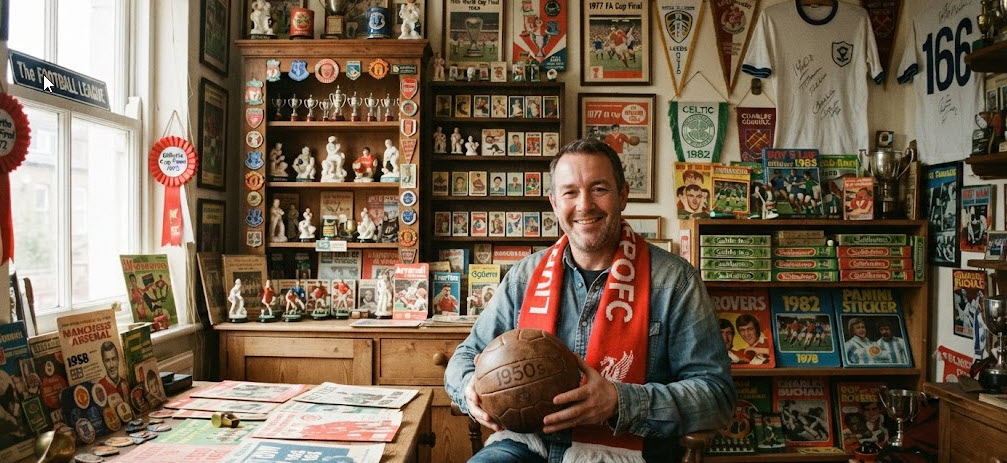
The Sacred Thread, Paper, and Ink: The Booming Global Passion for English Football Collectables
Welcome to the ultimate pursuit, there is a magic woven into the fabric of English football—one that transcends the modern television screen, the billions of digital impressions, and the slick corporate branding of the twenty-first century.
Across the globe, a cultural renaissance is underway. From Tokyo and Seoul to New York and São Paulo, fans are waking up to what English football enthusiasts have known for generations: that the history of the English game can be held in your hands. It lives in the threads of a retro polyester jersey, the crinkle of vintage newsprint, the sepia tones of a 1950s matchday programme, and the authenticated ink of a boyhood hero.
Let’s take a deep dive into the treasure trove of English football memorabilia and explore why the world is falling head over heels for the beautiful game’s physical past.
1. The Holy Grail: Vintage Football Kits
If football shirts were once merely garments meant to tell rival supporters apart on a muddy Saturday afternoon, today they are viewed as high art, cultural touchstones, and fiercely competitive investments.
The global appetite for retro English club and international kits has exploded. Why? Because a shirt tells a story.
The Aesthetics of the 80s and 90s: The geometric patterns, bold sponsor logos (think candy, structural breweries, and electronics giants), and daring collar designs from brands like Umbro, Adidas, and Bukta represent a golden era of design.
The Holy Grails: Collectors foam at the mouth for pristine examples of mid-90s Arsenal “Bruised Banana” away shirts, Manchester United’s sleek Newton Heath or sharp black-and-gold combinations, or classic Liverpool Candy-sponsored jerseys.
What to Look For: Condition is everything. Look for original manufacturer tags, minimal cracking to heat-pressed sponsor logos, and the absence of pulls in the fabric. Original player-issue shirts (featuring long sleeves or specific player specifications) command astronomical sums compared to replica fan versions.
2. Matchday Programmes: The Paper Time Machines
Before internet forums, match preview shows, and live text updates, the matchday programme was a fan’s lifeline. Buying one outside the turnstiles was a sacred pre-match ritual. Today, they serve as extraordinary historical archives.
Pre-War and Post-War Gems: The absolute pinnacle of programme collecting focuses on the pre-war era and the late 1940s. An FA Cup Final programme from the early 1900s can fetch thousands of pounds at specialized auction houses.
The Munich Tragedy Significance: Programmes featuring Manchester United from the tragic 1957–58 season—particularly unplayed fixtures or rescheduled matches following the disaster—carry an immense emotional and historical weight among dedicated historians.
The Pitfalls: Condition dictates everything in paper collecting. Watch out for rust marks from vintage staples, missing pages, pencil markings (often fans keeping score), and severe creases. A clean, unclipped, mint-condition programme from a major final is a prized asset.
3. Posters and Matchday Ephemera
Often overlooked by casual observers, posters, fixture broadsheets, and ticket stubs provide a brilliant window into the social history of Britain.
Wembley Final Posters: Official silk-screened or lithographic posters produced for FA Cup Finals or League Cup showpieces from the 1960s and 70s feature gorgeous retro typography and illustration. Framed correctly, they transform a study or living room into a shrine of British sporting heritage.
Stubs and Tickets: With modern football shifting heavily toward digital NFC passes on mobile phones, physical ticket stubs have become instant modern relics. A pristine, un-torn ticket stub from a legendary European night or a dramatic relegation decider holds disproportionate nostalgic value.
4. Signed Artefacts: Capturing Lightning in a Bottle
Autographs and signed memorabilia carry a direct, human connection to the legends of the turf. However, this is a sector where the golden rule is buy the seller, not just the item.
The Vintage Signature: Signatures penned in fountain pen on loose album pages or old club letterheads from legends like Sir Stanley Matthews, Bobby Charlton, or Jimmy Greaves carry deep gravitas.
Match-Worn Boot and Shirt Market: The market has evolved past standard replica shirts signed with a sharpie. Collectors increasingly seek out boots or shirts actually worn during a specific match, complete with mud stains, player sizing, and club kit-room provenance. Real, authenticated match-worn gear from Premier League icons is viewed by many as the blue-chip stock of the hobby.
Why the Global Boom?
The world is embracing English football more passionately than ever because of its unmatched blend of tribal passion, historic stadiums, and relentless drama. When an international fan pulls on a classic 1990s English club shirt or tracks down an old program from a packed stadium on a foggy winter afternoon, they aren’t just buying merchandise—they are buying a piece of living history.
Whether you are hunting for a rare 1970s league programme or looking to curate a wall of stunning retro kits, Terry, you’ve picked one of the most exciting, rewarding pursuits in the entire collecting world.